
Subtotal R0,00

News/18 February 2026, 11:01am/ GoodWill Mathebula
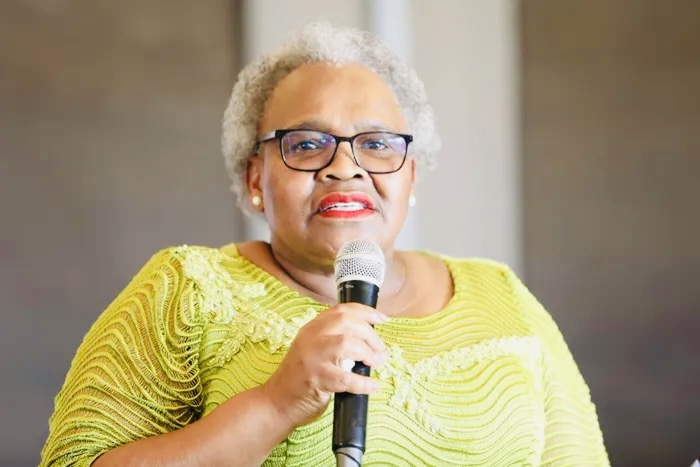
Minister of Social Development Sisisi Tolashe:Image Supplied
By GoodWill Mathebula: In the narrow streets of eMbekweni, where taxi fare can decide whether a family eats well this week, government paperwork usually feels far away—stuck behind long queues, distant offices, and missed calls to outdated numbers. But this week, the grant system came to the people, and with it arrived a message that was equal parts reassurance and crackdown.
Minister of Social Development Sisisi Tolashe used her visit to the Drakenstein Municipality in the Western Cape to spotlight the department’s push to bring services closer through the Integrated Community Registration Outreach Programme (iCROP)—a SASSA initiative that processes grant matters on-site, in full view of the community. The goal, she said, is simple: protect the grant lifeline by ensuring it goes only to those who qualify—and to remove those who do not.
“For the longest time, we had a situation where people were benefiting from our grants illegally, and now we have started a process that is extremely effective in making sure that we clean our system and get rid of those who are not supposed to be in our system,” Tolashe said.
Behind the words is a sharper reality: the clean-up is no longer theoretical. Tolashe warned that illegal grant recipients will face consequences, confirming that some cases have already entered the justice system. She said those abusing the system will be referred to the relevant institutions, including the police, with matters being handled through the courts for individuals already charged.
Yet the minister’s message was not framed as a threat to everyone—she insisted it was a line drawn to protect legitimate beneficiaries from a system strained by both demand and dishonesty. She urged people who are eligible not to fear the new verification steps.
”There shouldn’t be any anxiety about us taking your grant away. We will only do that if you are not eligible, and in such cases, we will process you through the system because you will be owing the state,” Tolashe said.
That word—“owing”—landed heavily. In communities where grants often stretch across multiple dependants, the idea of repaying the state signals a new phase: one in which fraudulent access could become a financial burden, not just a cancelled payment.
Still, Tolashe repeatedly returned to cooperation as the difference between delay and delivery, urging beneficiaries to respond when called in by the agency.
“People who are beneficiaries of SASSA in all our grants, when you are being called upon to appear in the office of SASSA, please just do that.
”We want to see whether those people are in fact existing and also whether they are eligible to receive our grants,” she said.
The “existing” remark hints at what officials quietly battle: duplicate records, identity misuse, and beneficiaries who cannot be reached. Tolashe pointed to practical issues that slow processing—especially changed phone numbers and the knock-on effect of centralised service points.
”Sometimes you have a different cell phone from the one used to apply. This is why sometimes it takes time for people to get to the offices of SASSA. When you are called, please come,” she said.
But the visit was not only about enforcement. It also served as a progress report on how SASSA plans to treat people with more dignity while managing volume. Tolashe highlighted a new queue management system meant to replace the chaos of overcrowded waiting areas with traceable, teller-based service.
“Our long queues, which were a problem and a complaint here, are being managed through a new system where people are attended to professionally, like in banks. You know your number and the teller assisting you, so we can trace your history at any given time,” she said.
For residents, that “bank-like” comparison is more than a metaphor—it is a promise that the grant system can be both humane and accountable, reducing lost files, repeat visits, and the uncertainty that fuels frustration.
Even so, the geography of access remains a stubborn obstacle. Centralised offices mean higher transport costs and time away from job-seeking or childcare. Tolashe acknowledged this, saying talks are underway to create additional service points in partnership with the municipality.
“We are in discussions with Drakenstein Municipality to provide offices that can assist our people so that they can process their grants closer to where they stay, rather than having to travel in taxis and pay,” she said.
And then came the issue that always spreads fastest: rumours. In many communities, misinformation moves quicker than official notices—especially about the Social Relief of Distress grant. Tolashe used the platform to directly counter claims that the R350 grant is about to end.
“People are misleading our community into saying the R350 grant is going to stop. If you had listened to the president, no, it’s not going to stop.
”The government is building it to be more sustainable and accessible to anyone 18 or older who is unemployed,” she said.
If the day carried a different angle, it was this: the state is trying to rebuild trust while tightening controls. In eMbekweni, the message was that eligibility checks are not a punishment for the poor—but a defence of the poor against a system weakened when funds leak to those who do not qualify.
The minister’s warning was blunt, but her reassurance was just as clear: show up when called, keep your details updated, and if you qualify, you should not be afraid. The clean-up, she suggested, is meant to protect the very people grants were created for.







