
Subtotal R0,00

Politics/03 February 2026, 06:42am/ Sipho Gumede
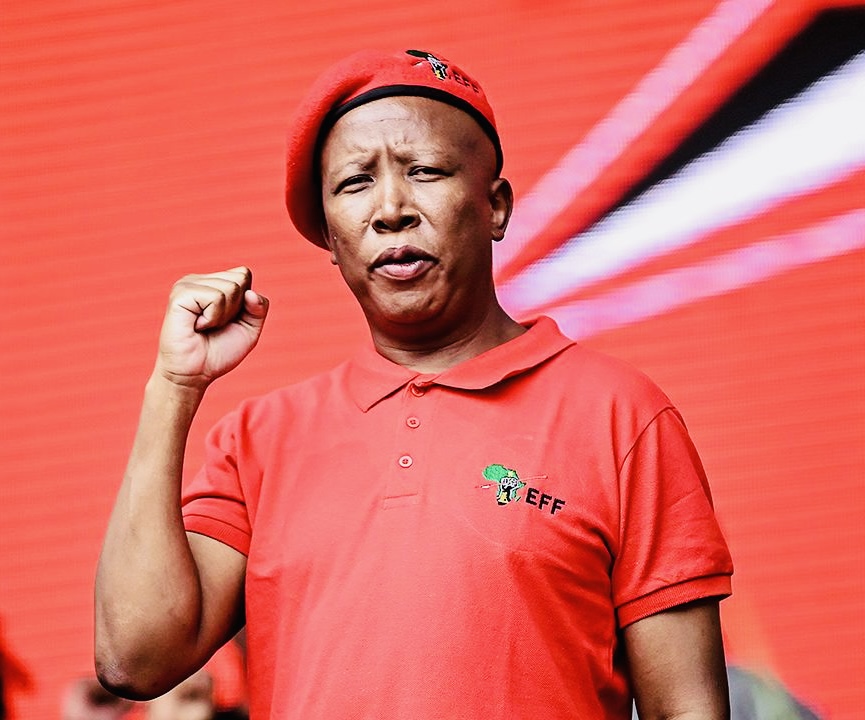
Julius Malema: Image Supplied
By Sipho Gumede: Economic Freedom Fighters (EFF) leader Julius Malema arrived to cheers and red berets on Friday, but it was his lifestyle—rather than his politics—that hovered over the EFF gathering in Boksburg.
With the party leader frequently photographed in Gucci and Louis Vuitton and reports circulating that his property holdings top R20 million, Malema used the moment to answer detractors directly: wealth, he argued, is not a betrayal of the struggle.
“Despite the advantages we have in society, we continue to champion the struggle of the poorest of the poor because we know that our happiness is incomplete while those we love, the masses of our people, are suffering,” he told supporters, framing comfort as something that should never erase conscience.
He pushed back against the idea that activism must look like hardship, reminding members that sacrifice is not measured by an empty wallet. The core message, he said, is that EFF leaders may live differently today—but their political mission is unchanged.
Malema has long insisted he has done more for the poor than rival leaders, and he has previously defended living in Hyde Park, the upmarket Johannesburg suburb synonymous with money and influence. In Boksburg, he returned to that line of defence in principle, telling members they do not need to be poor to serve the poor.
To illustrate, Malema reached for a touchstone of recent political history: the ‘Fees Must Fall’ movement. Students who led protests, he argued, did not need to be personally excluded from university to fight for others left outside the gates.
“Even when they were privileged and registered students, they continued to fight for those who were unregistered because they love an African child,” he said.
From there, Malema widened the lens—shifting from personal criticism to a sweeping indictment of capitalism. The global system, he argued, has dictated the “economic order of the world” for too long, and socialists should be ready to seize the moment if that dominance falters.
“For too long capitalism has been dominating the economic order of the world. As socialists, it is our duty in this moment to see the silver lining… as capitalism collapses, we are given an opportunity to usher in a new world order based on equality, prosperity for all and the return of the means of production into the hands of the people,” he said.
He insisted that EFF leaders—whatever their current comforts—have not forgotten where they come from, saying the party remains grounded despite its members’ “advantages.” Malema has also called for the collapse of capitalism.
In his speech, he pointed to the EFF’s policy fights as proof that solidarity is defined by action, not biography: from campaigns for the in-sourcing of cleaners and security guards to calls to eliminate student debt.
“It is this EFF that fights for the in-sourcing of security guards and cleaners even though we as leaders do not have a history of occupying those roles. It is the EFF that fights against student debt. Even we as leaders can afford to pay for our education, we do this out of principle because being a revolutionary is about the content of your mind and not what clothes you wear or what cars you drive,” he said.
As the crowd listened, Malema returned to the criticism that has followed him most closely—how a leader associated with luxury can credibly claim to speak for the poor. His answer was not to deny the “better life,” but to argue that political identity is shaped by memory, origins and purpose.
Malema said despite EFF leaders living a “better life”, they still understand poverty.
“The EFF remains the representative of the working class and the downtrodden and the forgotten masses of our people. It does not matter where we stay, it does not matter where we eat, our consciousness prevails over us because we are products of the poverty we want to defeat today.”







