
Subtotal R0,00

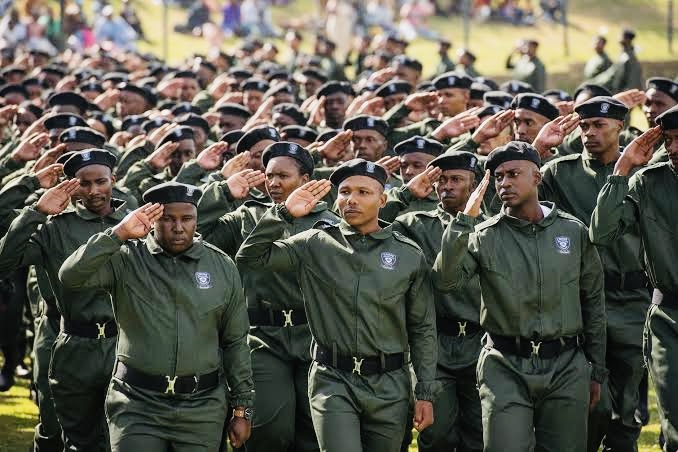
Gauteng/31 January 2026,07:23am/ Mpho Mokoena

By Mpho Mokoena: They’ve become a familiar sight on Gauteng’s streets: high-visibility crime prevention wardens, widely known as “AmaPanyaza,” moving through hotspots, backing up police, and projecting authority—sometimes amid questions about exactly what authority they legally have. On Friday, government moved to settle that debate by officially declaring more than 9,000 of them Peace Officers.
But as the announcement landed, a criminologist cautioned that legitimacy on paper could come with a hefty price—and real operational risks—if training, equipment and oversight don’t keep pace.
Criminologist Professor Kholofelo Rakubu from Tshwane University of Technology (TUT) said she supported the step, arguing the wardens’ wider deployment is already paying dividends beyond their original traffic-focused function.
“While traditionally deployed for traffic regulation, their expanded role has already demonstrated tangible benefits.”
“They support SAPS and Metro Police, increase visibility, deter opportunistic crime, and reassure communities,” she said.
Yet Rakubu warned that the new title alone won’t protect wardens—or the public—if key gaps remain. She said wardens are still unarmed and do not consistently have the depth of training expected of frontline law-enforcement personnel.
“Without addressing this shortfall, their safety and credibility as law-enforcement agents remain compromised,” she said.
Her prescription is a formalised training pipeline, not ad hoc instruction—covering arrest rules, evidence handling, conflict management, crime-scene basics, and crowd-control capabilities. In Rakubu’s view, these are non-negotiables for officers tasked with enforcing the law in volatile environments.
Then came the cost warning: the upgrade, she said, has a major financial footprint.
“AmaPanyaza” as Peace Officers comes with significant costs.
“Initial training and equipment alone could cost between R450 million and R850 million, with annual recurring costs of R350–530 million for salaries and professional development,” she said.
The funding question, she argued, must be shared—because while the project is rooted in provincial priorities, Peace Officer status sits within national law.
She said the Gauteng Provincial Government should bear primary responsibility of handling all the costs, as the initiative originates locally and addresses provincial safety needs.
“ The National Government must contribute, since peace officers tatus is a national legal designation under the Criminal Procedure Act, and uniform policing standards are essential.”
Rakubu’s proposed route is gradual expansion with shared accountability, rather than a sudden leap in powers without the infrastructure to support it.
She said the best option was a phased approach and a co-funded model.
“Gauteng should cover operational costs, while the national government supports curriculum development, oversight, and partial funding to ensure uniform policing standards.”
“Traffic wardens should undergo a phased integration into peace officer roles, beginning with limited enforcement powers while completing structured training.”
“Costs should be shared between provincial and national governments to balance accountability and ensure uniform policing standards,” she added.
Friday’s declaration did not come out of nowhere. It follows years of unease—especially since 2023—over how the wardens were appointed, what powers they could legally exercise, and who ultimately holds them accountable.
The announcement was delivered in Pretoria at a joint briefing involving the Ministry of Justice and Constitutional Development, the Ministry of Police, and the Gauteng Provincial Government. Acting Police Minister Professor Firoz Cachalia, Justice Minister Mmamoloko Kubayi, and Gauteng Premier Panyaza Lesufi led the briefing.
The decision also follows the findings of Public Protector Adv Kholeka Gcaleka, who released a report on October 22, 2025 after a complaint lodged in September 2023 by Advocate Paul Hoffman, director of Accountability Now.
That complaint focused on the establishment and rollout of the crime prevention wardens—raising red flags about their legal foundation.
Gcaleka found that the wardens’ appointment lacked a clear legislative framework, leaving powers, training, and accountability undefined.
Kubayi said the Public Protector issued remedial action to her office, Cachalia, and Lesufi—but the timeline slipped.
“The remedial action was to be implemented within 30 days of receipt of the report. Unfortunately, we did not meet the deadline, and technical teams have been engaging with the Public Protector on progress,” she said.
According to Kubayi, progress included aligning the declaration with the National Road Traffic Act. A meeting on January 20, 2026 brought together the three spheres of government to ensure the Peace Officer designation fits within the broader legal environment.
Kubayi confirmed that a revised request from the Premier’s Office sought the declaration of wardens as Peace Officers “in order to assist in enforcing safety and security for the residents of Gauteng Province.”
She framed the move under the Criminal Procedure Act.
“Section 334 of the Criminal Procedure Act vests the Minister of Justice and Constitutional Development with the authority to declare categories of persons as Peace Officers, define their powers, prescribe certification conditions, and regulate accountability,” Kubayi said.
She added the wardens are being prepared for their new roles.
She added that wardens are undergoing a second phase of training to qualify for their designated functions.
And she stressed that the new powers are not open-ended—jurisdiction, offence types, and certification requirements will determine what Peace Officers can do, and where.
“Peace officers may exercise powers only within a specified jurisdiction, in relation to defined offences, and strictly within the scope set out in the declaration.
“Duties may only be exercised when officers are properly appointed and in possession of a valid certificate; otherwise, any actions have no legal effect,” Kubayi said.







