
Subtotal R0,00

News/21 January 2026,07:44am/Linda Mgomezulu
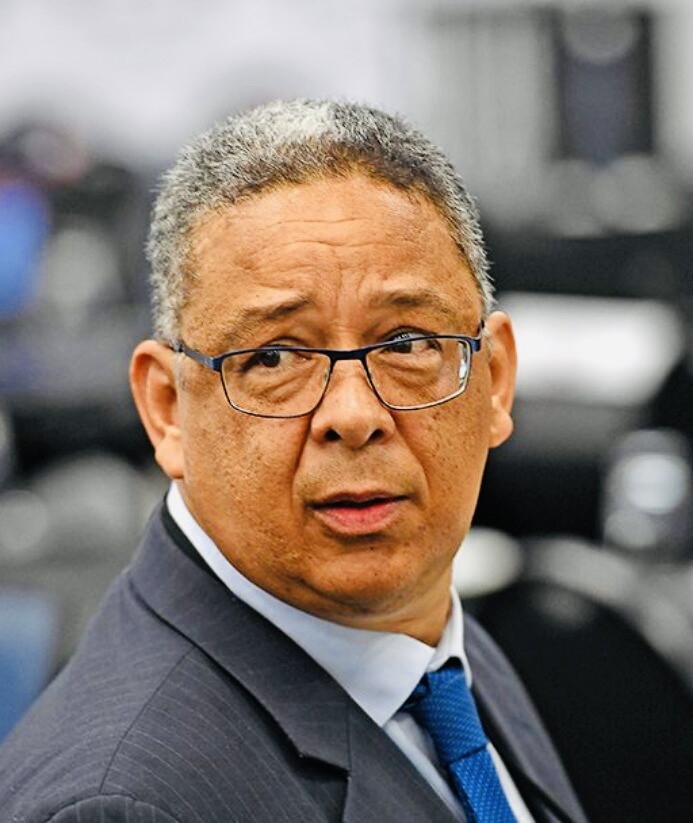
Robert McBride: Image Supplied
By Linda Mgomezulu: Parliament’s high-stakes inquiry into allegations that a drug cartel has burrowed into the heart of South Africa’s criminal justice system took a sharp turn on Tuesday, 20 January 2026, when Robert McBride — now head of the State Security Agency’s Foreign Branch — accused KwaZulu-Natal police commissioner Nhlanhla Mkhwanazi of trying to derail a sensitive watchdog investigation.
McBride, no stranger to bruising battles inside the security establishment, used his appearance before Parliament’s ad hoc committee to paint a troubling picture: a senior provincial police boss, he suggested, not only attempted to interfere in a major investigation, but also downplayed how close he was to an investigator who was later murdered.
The committee itself was convened after Mkhwanazi’s explosive July allegations last year that a drug cartel had infiltrated South Africa’s criminal justice system, politics and private security — claims that cast him publicly as a fearless insider confronting rot within state structures, including the South African Police Service (SAPS).
But on Tuesday, McBride’s version of events introduced a different storyline, one in which Mkhwanazi’s headline-grabbing public stance may have been something else altogether. McBride told the committee that the provincial commissioner’s press conference last year was intended to intimidate.
McBride’s testimony added fresh fuel to the visible fractures among senior law enforcement figures — fractures that have widened over years of infighting, mutual suspicion, and high-profile corruption cases. McBride has previously served as Ekurhuleni Metro Police chief and as head of the Independent Police Investigative Directorate (Ipid), where his tenure was marked by aggressive investigations into top SAPS leadership.
One of those investigations targeted former acting national police commissioner Khomotso Phahlane, who is facing corruption charges and has insisted he has been subjected to a prolonged smear campaign. Phahlane appeared before the same committee last week, naming McBride and forensic investigator Paul O’Sullivan among those he claims pursued him.
McBride, asked about O’Sullivan, offered an assessment that was as colourful as it was cutting, describing him as “eccentric, a little bit strange, but he does have good information”.
‘Mkhwanazi tried disrupting Phahlane probe’
When McBride turned his attention to Mkhwanazi, the temperature rose.
He testified that Mkhwanazi and Phahlane “are very close”.
Then, reading directly from a statement he submitted to the committee, McBride said: “I do not know General Mkhwanazi, except, I have previously encountered him in a meeting when former Minister Nkosinathi Nhleko introduced himself to the SAPS senior management and the ‘entities’.
“From my memory, General Mkhwanazi was whining about not being given work and responsibility and his whining was directed at the [now-former] National Commissioner, Riah Phiyega.
“From my time at Ipid, I am aware of incidents [involving] General Mkhwanazi having played an undue and prosecutable role in trying to disrupt and scuttle the Ipid’s investigation into Phahlane.”
A significant portion of Tuesday’s proceedings centred on the late Mandla Mahlangu, an Ipid investigator murdered in 2020.
McBride told MPs that Mahlangu was killed “after making incriminating statements” about someone who has since testified before the committee. Mahlangu had previously been reported to have been investigating Phahlane.
McBride then delivered testimony that he said raised new concerns about Mkhwanazi’s closeness to the slain investigator: he told the committee Mahlangu and Mkhwanazi had been friends, and that on two critical occasions — after Mahlangu was once shot at, and again after he was murdered — Mkhwanazi had been the first person on the scene.
Yet, McBride said, Mkhwanazi did not attend Mahlangu’s funeral — even though McBride did. “For me, it’s inconsistent and it needs to be looked at,” he added.
In 2023, Khumbulani Sithole was reportedly convicted of Mahlangu’s murder.
City Press has also previously reported allegations from a hitman that the killing “was ordered and paid for by the police”, and that Mahlangu, besides probing Phahlane, had been “due to testify in a Crime Intelligence internal inquiry into an alleged jobs-for-favours scheme within the police service”.
McBride also used his testimony to take aim at Cedrick Nkabinde, a former Ipid official who later became chief of staff to Senzo Mchunu — the police minister sidelined last year as the cartel infiltration scandal spread.
McBride told MPs that Nkabinde had been investigating Phahlane while at Ipid. But Nkabinde later told the committee that around 2017, a group was allegedly formed to block Phahlane from becoming national police commissioner — and, he alleged, to position McBride for the job. According to Nkabinde, O’Sullivan was among those involved.
McBride highlighted what he described as Nkabinde’s reversal, telling the committee that Nkabinde started as an investigator on the Phahlane matter, then later portrayed Phahlane as a victim. McBride called this shift Nkabinde’s “180 degrees is a very strange setup”.
He went further, alleging dishonesty and greed: Nkabinde, McBride said, “is just a greedy person… he likes money”.
“We are aware of him buying 10 suits at a time… He likes the flashy style, the money,” McBride told MPs.
McBride’s appearance also reopened the history of his own controversial suspension from Ipid.
He was appointed Ipid boss in 2014, then suspended on precautionary grounds in 2015 by then police minister Nathi Nhleko, linked to allegations around renditions.
His affidavit to the committee stated: “The rendition case was regarding the planning and execution of [a] 2010 operation.
“Five Zimbabweans were alleged to have killed a colonel in Zimbabwe. As a result, they were on the run in South Africa and alleged to have been assisted by Dramat and Sibiya.”
“Dramat” and “Sibiya” referred to former Hawks officers Anwa Dramat and Shadrack Sibiya.
McBride told MPs he believed they were framed. Sibiya later rose to become deputy national commissioner of crime detection, but was suspended last year amid the turmoil triggered by Mkhwanazi’s cartel allegations. The Constitutional Court set McBride’s suspension aside in 2016, allowing him to return to Ipid until February 2019.
McBride also drew the committee’s attention to what he described as internal interference at Ipid during his suspension, reading from another section of his affidavit:
“Upon my return from suspension in October 2016, I was alerted to irregularities on how investigations had been conducted, during the time when I was on suspension,” it said.
“There were allegations that certain cases [that] were being investigated by the Ipid had been prematurely closed without carrying out proper investigation processes as contained in the standard operating procedures.
“Part of the problem was due to infiltration by Crime Intelligence in the form of Brigadier Tlou Kgomo… who had been appointed at Ipid as Director: Investigations… He left Ipid soon after my return.”
McBride asked rhetorically “what business” Crime Intelligence officers had spying on politicians or carrying out political instructions. And he warned that the “control of that fund” — a reference understood to mean the secret service account long linked to looting claims — “makes people invincible”.
In a moment that reframed the hearing from personalities to systemic failure, the committee’s evidence leader, advocate Norman Arendse SC, put it to McBride that Ipid under his leadership took on police corruption directly.
McBride replied: “It was the first time it was taken on, corruption and systemic corruption in SAPS.
“In fact, at the end of my tenure, there were between eight and 13 generals and about 10 brigadiers who were on trial for corruption…
“[It had] never been done before, [it] should have been a national emergency, and no new cases since I left Ipid have been taken up again.”
He said he had previously warned Parliament about the scale of the problem. “I even stated that it is the greatest security threat to this country. I spoke out about prosecutors who were protecting criminals in uniform.”
South Africa, he added, was “reeling from what looks like an ineffective criminal justice system”.
Tuesday’s sitting was also marked by tension over McBride’s approach to the proceedings.
He did not submit an up-to-date affidavit, and MPs criticised what they saw as an overly casual demeanour. EFF MP Leigh-Ann Matthys said he appeared “indifferent” and “is not taking the committee seriously”.
Chairperson Soviet Lekganyane told McBride that his “gesticulations” were worrying MPs and urged him to “withhold such conduct”. McBride explained that he smiles “quite easily” when speaking.
Committee members are expected to question McBride further today, as the inquiry digs deeper into the claims that first rocked the country last July — and now, increasingly, into the competing motives and loyalties of those who say they are fighting corruption from inside the system.







