
Subtotal R0,00

News/ 17 January 2026, 06:10am/Mpho Mokoena
Paul O’Sullivan: Image Supplied
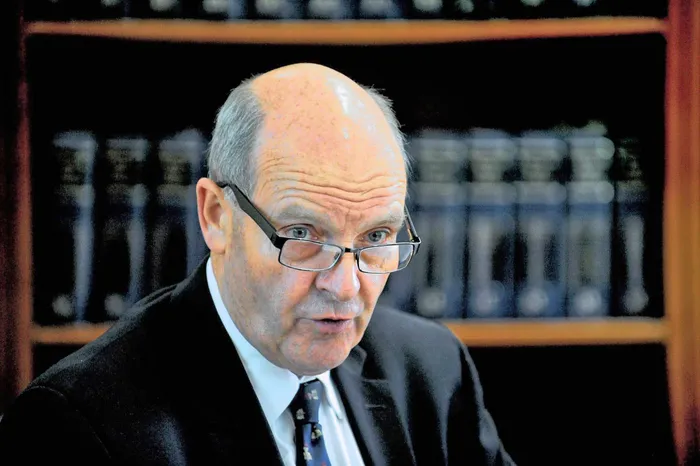
By Mpho Mokoena: A damning picture of rot, leaks and weak accountability inside Crime Intelligence dominated proceedings at Parliament’s Ad Hoc Committee on Thursday, as divisional boss Dumisani Khumalo laid bare a unit he says was “weakened for a very long time” — and now faces a painstaking rebuild.
While the hearing touched on several controversial names, the day’s most striking thread was Khumalo’s candid acknowledgement of systemic failures: shaky internal controls, a culture of poor discipline, and the misuse of covert cash.
At the centre of Khumalo’s reform pitch was the Secret Fund, which he admitted had been looted and abused. He confirmed there was abuse of the Secret Fund “big time”. One Eastern Cape incident, he told MPs, forced the division to tighten controls after millions were stolen or robbed from a Crime Intelligence office.
Khumalo described how an attempt to clamp down was itself sabotaged from within. “I assigned a team to do a surprise inspection and that information leaked. When the team was on the way, the commander reported a fake robbery. That commander was dismissed afterwards and criminally charged.
“There are a lot of reforms and control measures that we put in place that were not in existence,” he said, adding that there were challenges.
But Khumalo suggested money was only part of the problem. He warned that consequence management inside the policing environment is inconsistent and sometimes toothless, telling the committee that discipline must be driven from the top. He cited a case in the Western Cape where a member facing serious crime had a one-month salary docked and then returned to work. “The culture of disciplining is something we need to deal with from the top. We must have provincial heads and senior officers that are to instill discipline and consequence management will be realised.”
The wider goal, Khumalo said, is a full turnaround — but one hindered by years of damage and instability. “It will take some time. It was weakened for a very long time.” He told MPs the division had also been disrupted by the arrest of senior managers and the freezing of posts for almost a year, leaving gaps where oversight and capacity should have been.
Rebuilding, he argued, requires more than new faces. It needs rules, tools and coordination across the state. “The challenges in the environment will need the working together of formal (and) different levels of the arms of state,” said Khumalo. He added that a functioning framework is essential because policy had not kept pace with operational realities, pointing to “non-existence of policy, including legal framework in the Crime Intelligence.” “Once that is done, you need proper tools in the form of personnel to implement the reforms.”
Against that backdrop of institutional weakness and internal leaks, EFF MP Leigh-Ann Mathys pressed Khumalo about claims involving forensic investigator Paul O’Sullivan, whose name has surfaced repeatedly during the inquiry, including allegations by some witnesses that he exerts influence and conducts investigations at the Independent Police Investigative Directorate (IPID).
Khumalo revealed that O’Sullivan has been monitored by the unit. “Without follow-ups on that, he has been one of the persons of interest for a few months,” Khumalo said. Asked when this status began, he said it stretched back “for a period of about 12 months.” He explained: “As I indicated earlier on today that there are people that become people of interest just because they come out of nowhere and become something. By saying for the past few months, I refer to me having been in charge of Crime Intelligence. He has been a person of interest.”
Mathys referred to O’Sullivan’s book and the claim that Crime Intelligence officers were feeding him information. “What have you done?” she asked.
Khumalo replied that multiple investigations orbit the issue and criticised what he described as a national habit of acting too late. “I think that is why this morning, one made a comment that talk to the culture in our country of looking at something happening, and doing nothing until it becomes a problem. Those are some of the issues one had to look at coming in the current position,” he said.
Despite the grim admissions, Khumalo insisted a recovery plan exists. “The plan is there to be implemented. We can see the light at the end of the tunnel,” he added.







