Subtotal R0,00

News/ 31 December 2025, 05:44am/Sipho Gumede
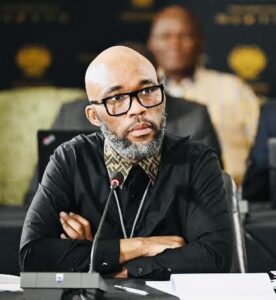
Vusimuzi “Cat” Matlala: Image Supplied
By Sipho Gumede: By the time word filtered out of the prison system, Vusimuzi “Cat” Matlala was already gone.
Not released. Not moved to a nearby centre. Gone from the familiar confines of Kgosi Mampuru II Correctional Centre in Pretoria and deposited — quietly, decisively — at the eBongweni Correctional Facility in Kokstad, a prison so feared and so tightly controlled it has become shorthand for the State’s ultimate answer to “high risk”.
The Department of Correctional Services (DCS) has now confirmed the controversial businessman’s relocation, saying Matlala — accused of attempted murder, money laundering, and conspiracy to commit murder — was transferred on December 21, 2025, to what is widely described as South Africa’s most secure prison. The timing, the secrecy, and the destination have ensured one thing: the move has become a story bigger than a simple administrative decision.
DCS spokesperson Singabakho Nxumalo insists nothing extraordinary happened — at least not on paper.
“The transfer of remand detainees and sentenced offenders between correctional facilities is a standard operational practice, informed by a range of considerations, primarily security, safety, operational requirements, and effective inmate management across the correctional system,” he said.
Nxumalo also anchored the department’s position in law, saying the National Commissioner of Correctional Services, Makgothi Thobakgale, has the legal power to move any inmate to a facility deemed suitable.
“In terms of Section 6 of the Correctional Services Act, the national commissioner of Correctional Services is legally empowered to detain an offender or remand detainee at any correctional centre, notwithstanding the wording of a warrant. This provision exists to enable the department to respond appropriately to security assessments and operational demands,” added Nxumalo.
A prison built for the “unmanageable”
But eBongweni is not just any correctional centre.
It has a reputation for strict controls and has recorded minimal to no escapes since its establishment, underscoring its role in housing high‑risk inmates. And at its hardest edge lies the super-maximum unit many South Africans know by name — a place designed to break routines, block communication, and prevent planning.
eBongweni C-Max is the country’s super maximum security facility, where no inmate has ever escaped, as prisoners at the facility are kept under extreme security, including 23 hours a day in solitary confinement.
That detail alone has fuelled speculation: what threat assessment, what intelligence, what concern could justify sending a remand detainee that far — and that deep — into the country’s most restrictive detention environment?
Matlala’s high‑profile case has drawn significant public attention following his arrest early this year and is scheduled resume before the Gauteng High Court, Johannesburg, in January 2026. That looming court date has only intensified scrutiny, because Kokstad is far from Johannesburg — and moving detainees that distance is expensive, complex, and risky in its own right.
Anti-crime activist Yusuf Abramjee says the hush around the transfer has helped the rumour mill do what it does best.
“The department is saying nothing is unusual about this move as it forms part of the safety and security measures. There has been a lot of speculation as to why he has been transferred. The department has also stated that they will comment further on this matter, which is understandable. I would assume that they have transferred him for safety and security reasons. It would be interesting to see what the real reason was behind it,” he said.
Critics call it “fishy” — and costly
Not everyone is buying the “routine” explanation.
Johannes Majoe, representing Exclusive Mediators, criticised the transfer, claiming it will lead to wasteful expenditure as Matlala is expected to return to the Gauteng High Court in January 2026.
“For someone who is still attending his trial, the transfer does not make sense, and this proves the point that there is something fishy and procedurally wrong with this move. We have not been told that he poses any threat to the system, except for the discovery of a cellphone in his cell in September. For me, this is a sheer waste of taxpayers’ money because they will have to transport him back and forth when his trial resumes next year,” he stated.
eBongweni’s reputation was not built on ordinary detainees. Serial rapist Annanias Mathe, Western Cape gang leader George Thomas, and Umlazi gang leader Sibusiso Mzimela are some of the high-profile inmates to have been kept under 23-hour solitary confinement in this facility.
And that is the heart of the public intrigue: when a businessman awaiting trial is moved into the same “no‑escape” ecosystem reserved for the country’s most dangerous offenders, South Africans naturally ask what the State knows — or fears — that it isn’t saying.
For now, DCS maintains it’s procedure and policy. Critics call it suspicious and expensive. And Matlala, at the centre of it all, sits in a fortress where silence is part of the architecture.