Subtotal R0,00

International/ 22 November 2025, 18:23pm/Staff Writer
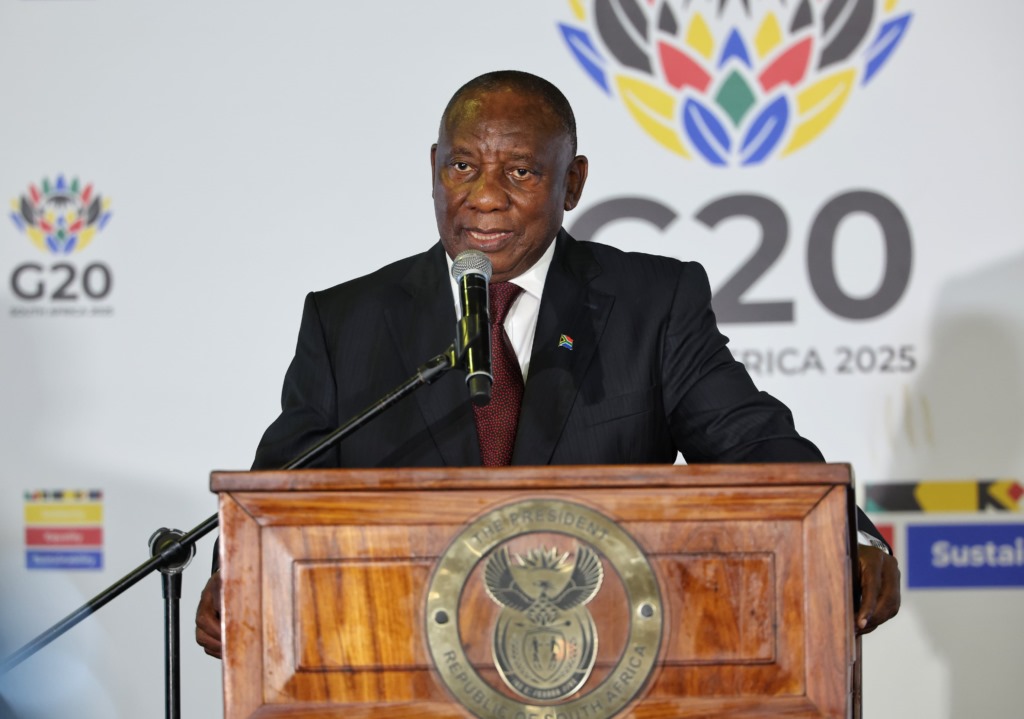
President Cyril Ramaphosa: Image Supplied
By Staff Writer: In a move that drew swift criticism from Washington, a newly drafted G20 leaders’ declaration was adopted on Saturday at a high-stakes summit in Johannesburg, addressing the climate crisis and a slate of global challenges. The document, crafted without United States participation, drew fire from a White House official who labeled the process “shameful.”
The declaration’s language, marked by several elements Washington has long opposed, was framed as non-negotiable by South African officials. A spokesperson for President Cyril Ramaphosa stressed that the text “can’t be renegotiated,” signaling a firm position from Pretoria amid broader tensions with the Trump administration over the proceedings.
“We had the entire year of working towards this adoption and the past week has been quite intense,” the spokesperson told reporters, underscoring the marathon negotiations that culminated in the summit’s closure. Ramaphosa — who hosted the gathering of 20 global leaders — earlier described a strong sense of unity, saying there was “overwhelming consensus” for a summit declaration.
G20 envoys reportedly drafted the leaders’ declaration on Friday in the absence of any U.S. involvement. Four sources familiar with the matter confirmed the draft’s creation in this manner, setting the stage for a document that departed from the U.S. position on several core issues.
The declaration emphasized the gravity of climate change and the urgent need for adaptation, alongside praise for ambitious renewable energy targets. It also highlighted the severe debt burdens borne by poorer nations, framing the crisis within a broader call for responsible global economic governance.
The evolutionary shift in tone — one that foregrounded climate action and sustainable development — is viewed by U.S. officials as at odds with the White House’s preferred framing. The phraseology, echoing long-standing international climate commitments, was described by U.S. representatives as a provocation, given Washington’s historical reservations about binding climate language in such declarations.
The climate emphasis in the text effectively signaled a rebuke to views in Washington that climate references should be more cautiously approached or avoided in a consensus document where other priorities—geopolitical, economic, and security concerns—often take precedence.
In his opening remarks, Ramaphosa said there had been “overwhelming consensus and agreement that one of the other tasks we should undertake right at the beginning is to … adopt our declaration.” He thanked delegations for collaborating “in good faith to produce a worthy G20 outcome document” and urged that the first African presidency of the G20 should retain its credibility and stature.
“We should not allow anything to diminish the value, the stature and the impact of the first African G20 presidency,” Ramaphosa added, seeking to frame the summit as a milestone in multilateral diplomacy.
Trump publicly stated that the United States would not participate in the summit, arguing that the host nation’s policies and governance — including claims of discrimination against the White minority by South Africa’s Black-majority government — disqualified participation. Washington also rejected the host country’s broader agenda, which included promoting solidarity with developing nations, aiding in climate adaptation, and facilitating a transition to clean energy, alongside calls to reduce the debt burdens of poorer economies.
The decision not to attend cast a shadow over Ramaphosa’s diplomatic push to elevate South Africa as a nexus of multilateral diplomacy and cooperation, and it led to questions about how the U.S. absence would influence the legitimacy and implementation of the declaration’s provisions.
The U.S. is scheduled to host the G20 in 2026, a prospect that will require careful recalibration of the leadership narrative as the global community weighs the evolving dynamics of climate action, development finance, and economic stability.
As the summit concluded, Ramaphosa signaled that negotiations that culminated in the adopted declaration would be followed by continued engagement with all member states to translate the text into concrete policy actions and funding mechanisms. The presidency indicated that it would resist attempts to reopen or renegotiate the document, emphasizing that the period of intensive drafting had yielded a durable consensus.