Subtotal R0,00


News/ 19 October 2025, 08:14am/ Ayanda Shezi
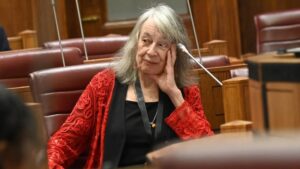
De Haas refuses to reveal informants, citing safety concerns and professional integrity. Image Supplied
By Ayanda Shezi: Professor Mary De Haas stood firm before Parliament’s Ad Hoc Committee, making it clear that she would not reveal the identities of her confidential sources. Her appearance before the committee on Tuesday became tense at times, as she warned that she might withdraw her testimony if pressured to violate her professional ethics.
De Haas was invited to testify before the committee, which is probing claims that a sophisticated criminal network—referred to as the “big five”—had infiltrated the South African Police Service. She became a central figure in the inquiry after publicly calling for the Political Killings Task Team (PKTT) to be disbanded. Her testimony followed accusations by KwaZulu-Natal Police Commissioner Lieutenant General Nhlanhla Mkhwanazi, who alleged that she had access to internal police information and was “very vocal” in advocating for the PKTT’s dissolution, questioning whether she could be objective.
The PKTT was dissolved by the now-suspended police minister Senzo Mchunu, whom Mkhwanazi accused of shielding well-connected criminals — an accusation Mchunu denied.
During her testimony, De Haas strongly criticised what she described as widespread abuse, corruption, and poor transparency within the PKTT and related police structures. However, she declined to present documentary evidence or disclose the individuals who provided her with sensitive information about the task team’s alleged misconduct. Her refusal drew scrutiny from MPs who argued that evidence from unnamed sources would be difficult for the committee to evaluate.
“It is my pleasure that you have taken this initiative, but I cannot give names,” De Haas said. She insisted she had an ethical obligation to protect those who approached her. She added, “What I’m saying here is that it’s not just in this case – it was one policeman I must protect – the other cases involve different people who spoke to me independently. I live in a very violent province. I can hardly move myself now because I could get killed, so I have to take every step to protect people.”
Even when asked if she would be willing to identify individuals during a private in-camera session, De Haas declined, arguing that trained investigators were better suited to handle the information.
Committee chair Lesetja Lekganyane questioned how the committee should treat unverified claims. “If you say you have evidence based on a source but refuse to name the source, how is the committee to proceed? Are you saying the evidence must fall away because it is unsubstantiated?” he asked.
Some MPs proposed possible compromises. ANC MP Xola Nqola suggested an in-camera testimony option, while EFF MP Leigh-Ann Mathys and others said protocols could be developed to safeguard informants.
Others were more critical. MK party MP David Skhosana urged De Haas to cooperate “for the sake of truth,” while fellow MK MP Sibonelo Nomvalo accused her of challenging Parliament’s authority, saying, “This is Parliament, not a place to undermine oversight.”
PA MP Ashley Sauls objected to De Haas’s suggestion that she might end her testimony, saying Parliament had constitutional powers to compel cooperation.
Some MPs, including DA MP Glynnis Breytenbach, supported De Haas’s stance, noting the importance of protecting sources in academic work.
Evidence leader Norman Arendse acknowledged her ethical concerns but said the committee still needed verifiable evidence, proposing that the committee consider sensitive information behind closed doors.
De Haas maintained her position: “I am still a religious social worker. Betraying someone’s confidence would end my professional integrity.” She emphasised that much of what she shared was already in the public domain, explaining, “Most of what I’ve presented is already on record. Only one policeman’s name is withheld for his safety. I’ve reported these matters to Parliament, to the police, and to committees before.”
She concluded by saying she was “just the messenger” and that other investigative structures were equipped to handle the deeper details.