Subtotal R0,00

Politics/ 28 October 2025, 12:15pm/ Ayanda Shezi
DA introduces new policy aiming to replace BEE: Image Supplied
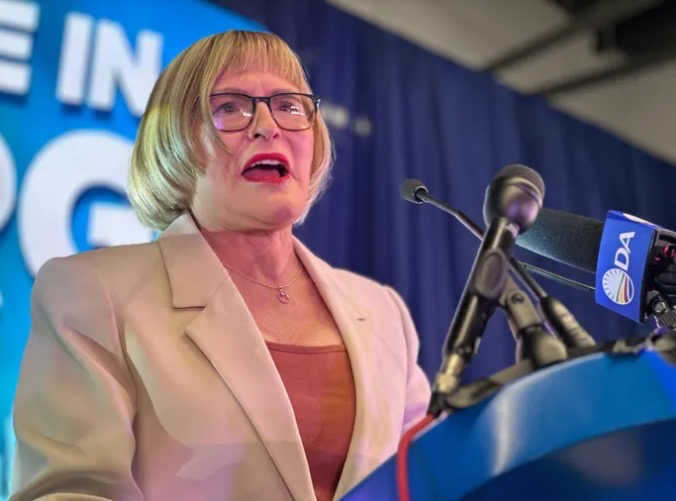
By Ayanda Shezi: Democratic Alliance (DA) federal council chairperson Helen Zille has unveiled the party’s plan to replace the country’s Black Economic Empowerment (BEE) policy with what it calls a “model of genuine empowerment” aimed at benefiting all South Africans.
The announcement came during a media briefing in Gauteng on Tuesday morning, where Zille and senior DA officials outlined the party’s vision for economic inclusion.
The DA’s proposed policy, which the party describes as the “Economic Inclusion for All Bill,” aims to shift the focus from BEE’s current framework—which critics argue primarily enriches politically connected elites—to broader job creation, poverty alleviation, and inclusive economic growth.
According to Zille, the party’s initiative seeks to bring public attention to what they describe as “the evils of the ANC’s abuse of BEE for personal enrichment.”
“This is about building an economy that works for everyone, not just a privileged few,” Zille said during the briefing, which was attended by Dr Ivan Meyer, DA Federal Chairperson; Mat Cuthbert, DA Head of Policy; Dr Jack Bloom, DA Gauteng Shadow MEC for Health; and Bridget Masango, DA Deputy Spokesperson on Social Development.
The DA has long criticised BEE for failing to benefit the majority of South Africans, arguing that it has disproportionately empowered a small political elite while leaving broader economic inequality largely unaddressed.
In launching their proposed bill, the party emphasised that their model would focus on real opportunities for ordinary citizens through increased employment and skills development, rather than mere wealth transfer to those with political connections.
However, the announcement has been met with strong resistance from the ruling African National Congress (ANC) and other key political stakeholders.
President Cyril Ramaphosa, defending the existing Broad-Based Black Economic Empowerment (B-BBEE) legislation, stressed that the DA has yet to present any formal proposals to Parliament to amend or repeal the policy.
“The issue of BEE as it’s being raised by the DA, I have not yet seen their proposals,” Ramaphosa said.
“Currently we have a BEE policy, a BEE policy that is rooted and underpinned by our Constitution and the laws that we have passed. So if anyone wants an amendment to the BEE legislation, they must table their proposals—they must be taken for discussion in Parliament.”
Ramaphosa emphasised that the BEE framework remains a vital instrument for addressing South Africa’s historic economic imbalances. “At the moment, the BEE policies, legislation, regulations as they stand apply without any dilution whatsoever.
We will continue to insist that the BEE process of transforming our economy is the correct approach to ensure participation in the economy of all South Africans. Hitherto, it has not been inclusive—it has been exclusive, benefiting only those who had privilege under the old economic system.”
The President added that the purpose of BEE policies is to allow all South Africans to access opportunities in business and employment, particularly those who were historically excluded.
“BEE policies are meant to benefit all South Africans,” he said, underscoring the government’s commitment to ongoing transformation.
Political analysts, however, have highlighted both the successes and limitations of the current policy.
Siyabonga Ntombela, an independent political analyst, noted that while B-BBEE has facilitated the entry of some black individuals into previously white-owned companies, the benefits have often concentrated among politically connected individuals.
“A handful of black politically connected individuals have become directors and partners in previously white-owned companies. By doing so, they have assisted these companies to secure lucrative government contracts,” Ntombela said.
The ANC has maintained a firm stance against any wholesale scrapping of BEE. ANC spokesperson Mahlengi Bhengu-Motsiri said that while legislative amendments are possible, they must not undermine the law’s core intent.
“There will not be a day in South Africa where BEE is scrapped as legislation,” she said. “Where there are amendments, I’m certain that like any other piece of legislation, amendments are acceptable for as long as they do not deviate from the substance of that law.”
Labour organisations have also weighed in on the debate. Matthew Parks, Parliamentary Coordinator for the Congress of South African Trade Unions (COSATU), echoed the ANC’s position, highlighting the continuing necessity of BEE and employment equity laws in redressing historical injustices.
“Transformation legislation didn’t fall from the sky,” Parks said. “When we have reached an equal society, you can have that discussion. But for the time being, we need it.”
As the political conversation around economic empowerment intensifies, the DA’s Economic Inclusion for All Bill is expected to spark heated debate in Parliament and across the country.
Proponents argue it could democratise economic opportunity, while opponents warn that abandoning or drastically altering BEE could reverse decades of progress toward redressing inequality.