Subtotal R0,00

Free State/ 25 October 2025, 07:34am/GoodWill Mathebula
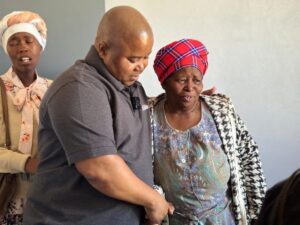
MEC Saki Mokoena and 88-year-old Mamiki Randimpane: Image Supplied
By GoodWill Mathebula: In a ceremony that blended pride, disbelief, and renewed hope, 88-year-old Mamiki Randimpane of Selosesha, Thaba Nchu stepped across the threshold of a freshly built home, a beacon in South Africa’s drive to replace mud houses with innovative, sustainable housing.
The moment marked more than a new residence; it signaled a bold shift in how the state delivers shelter to the elderly, families, and first-time homeowners, with speed, durability, and dignity at the core.
Mamiki’s journey from mud-walled memories to a modern, welcoming home was ushered in by Saki Mokoena, MEC for Cooperative Governance and Traditional Affairs (Cogta) and Human Settlements.
The emotional moment—captured in tearful smiles and relieved sighs—highlighted the human face of a policy meant to restore stability to some of the province’s most vulnerable communities.
The ceremony drew a blend of beneficiaries from Thaba Nchu trusts and local leaders, all keen witnesses to the kind of homes that will soon replace the mud-dominant landscapes of their town.
MEC Saki Mokoena spoke with conviction about the province’s strategy, stressing that the department plans to hand over about 50 Innovative Building Technologies (IBT) houses by December 2025. He said:
“Today marks more than the unveiling of a single house. It is the tangible promise that the state can, with speed and dignity, replace despair with shelter, fear with security, and uncertainty with hope.
The Innovative Building Technologies we are rolling out are not just bricks and panels; they are a new framework for how we approach housing delivery in the Free State—fast, resilient, and scalable.
For Mamiki and for all the beneficiaries in Thaba Nchi and Qwa-Qwa, this means a life where the home stands as a shield against the elements and a platform for opportunity.
By December this year we aim to hand over 50 IBT homes, proving that bold policy choices can translate into real, immediate relief for our communities. This is the future of human settlements: rapid, sustainable, and people-centred.”
Mokoena continued, explaining the broader vision:
“IBTs address the core challenges we have faced for decades: lengthy construction timelines, escalating costs, and homes that crumble under climate stress. With this approach, we shorten the gap between need and provision, while ensuring structural integrity and energy efficiency.
Our 2024 White Paper enshrines emergency responsiveness—a blueprint for speed without sacrificing quality. The almost 300 houses planned for Qwa-Qwa and Thaba Nchu this year are not a one-off; they are the start of a systematic shift in how we build, how we align resources, and how we restore dignity to families who deserve a stable home.”
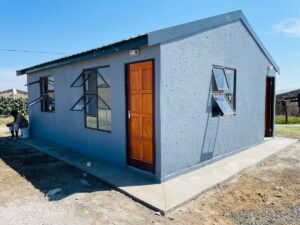 Newly built home for Mamiki Randimpane: Image Supplied
The ceremony was also attended by Mangaung Metro MMC for Human Settlements, Cllr Ntombi Nhlapo, whose presence underscored the city’s commitment to affordable, rapid housing delivery and to ensuring beneficiaries understand the process and can access support as builds progress.
Nhlapo stressed the importance of cross-government collaboration and transparency, saying:
“Today’s event is a reminder that our work in local government must translate policy into practical, life-changing outcomes. The rollout of IBTs is not just about construction; it’s about community trust, transparency, and continuous support for beneficiaries. We are witnessing a landmark shift in Mangaung’s housing landscape, and I am committed to sustaining that momentum so each house becomes a beacon of stability and opportunity for its residents.”
88-Year-Old Mamiki Randimpane, the beneficiary from Selosesha, spoke from the heart about what the new home means in her twilight years:
“I never thought I would see this day. I’m overwhelmed with disbelief and gratitude. To have a roof that won’t leak and a home that keeps my family warm is a blessing beyond words. This house isn’t just walls; it’s safety for my grandchildren, a place where we can grow old with dignity, and proof that our voices are heard.” She added:
“When I lived in the mud, every storm felt like a test I wasn’t sure I’d pass.
Now, walking through this new home, I feel respected and protected. It’s not just about having a room to sleep; it’s about belonging to a community that believes in us, that invests in us, and that doesn’t forget the elderly who have carried our town for so long.” Randimpane urged patience for others still waiting:
Observers noted that IBTs could redefine housing delivery not only in the Free State but as a model for other regions facing similar housing backlogs. If executed with the transparency and beneficiary-centred approach showcased here, the program could become a blueprint for rapid, sustainable housing that protects and dignifies residents, from the eldest elders to first-time homeowners.