Subtotal R0,00

News/ 25 October 2025, 05:29am/Staff Writer
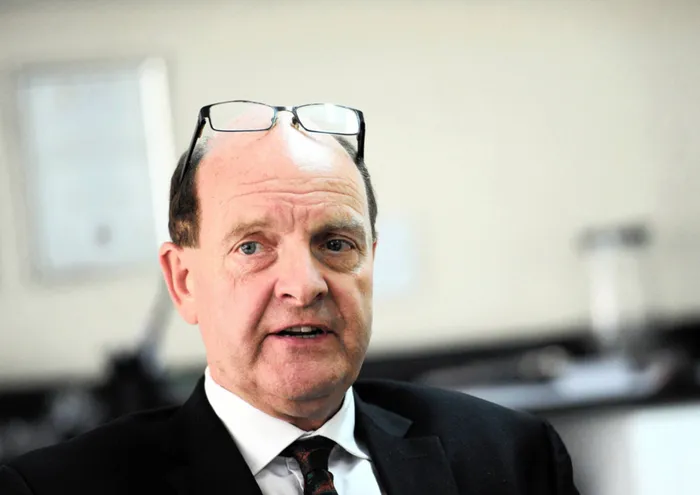
Paul O’Sullivan: Image Supplied
By Staff Writer: The Helen Suzman Foundation (HSF) has pushed back against assertions by forensic investigator Paul O’Sullivan that he funded the foundation’s legal efforts to challenge former Independent Police Investigative Directorate (IPID) head Robert McBride.
The Foundation described O’Sullivan’s statements as “an unfortunate mischaracterisation” made during an online interview on October 12, 2025.
O’Sullivan, speaking with journalist Alec Hogg, claimed that he had “funded” the foundation with a substantial amount of money in an effort to overturn McBride’s suspension as IPID Executive Director.
The HSF’s statement emphasizes that these claims do not reflect the foundation’s funding history or its relationship with McBride’s cases.
In its public note, the Foundation outlined its role and its relationship with legal counsel in the McBride matters. It said it acted as amicus curiae in McBride’s 2015 case against the Minister of Police in the North Gauteng High Court, and in the subsequent Constitutional Court appeal in 2016.
The Foundation stressed that its legal representatives, Webber Wentzel, handled the matter on a pro bono basis, as did senior counsel.
“In the course of this public interest matter, Mr O’Sullivan, on behalf of Forensics for Justice, did engage in consultations with us along with Webber Wentzel’s pro bono department,” the Foundation said in its statement.
The Foundation further clarified that in 2019 it again acted as amicus curiae in McBride’s urgent application in the North Gauteng High Court, which concerned the non-renewal of his contract as IPID Executive Director.
It stressed that it “did not engage with Mr O’Sullivan during the course of this second matter.” The HSF noted that its legal representatives in the 2019 case, Webber Wentzel and senior counsel, also acted on a pro bono basis.
HSF later appealed the case in the Supreme Court of Appeal, arguing that the process of renewing McBride’s contract “lacked procedural integrity” and that the settlement reached in the High Court “indirectly permitted executive influence over the renewal of the IPID Executive Director, compromising the independence of IPID.”
The Foundation confirmed that O’Sullivan had made a once-off donation of R100,000 to the organisation in 2019, but stressed that the contribution was not linked to any specific case. “As Mr O’Sullivan’s donation was general in nature and not linked to any specific case, it was utilised by us in our core operations,” it said.
The HSF underscored its commitment to independence and to its broader constitutional mission. “HSF’s involvement in the McBride matters was guided solely by our mission to advance constitutionalism and to safeguard the independence of key state institutions. In furthering our mission we are committed never to compromise on our independence, such that we are able to effect our work without fear or favour.”
The dispute comes at a time when questions about funding sources and independence in public-interest litigation remain a sensitive topic in South Africa. The Helen Suzman Foundation, established to promote constitutional democracy and the independence of key state institutions, has frequently engaged in litigation and amicus interventions to advance governance and anti-corruption priorities.
Analysts note that the core of the Foundation’s public clarification hinges on distinctions between general donations and case-specific funding, as well as the pro bono nature of legal representation. The statement reiterates that the Foundation’s strategy in McBride’s cases was aligned with its constitutional mandate, and that its independence was safeguarded by design.