Subtotal R0,00

Economy/ 08 September 2025,09:52am/Staff Writer
By Staff Writer: After years of setbacks and delays, the colossal Polihali Dam in Lesotho’s rugged highlands is finally making significant progress, signaling a new chapter in regional water cooperation and infrastructure development. According to the Lesotho Highlands Development Authority (LHDA), roughly 30% of the main dam construction has been completed, marking a notable milestone in this ambitious project set to transform water access for South Africa’s Gauteng province and bolster Lesotho’s energy output.
Nestled at the confluence of the Senqu and Khubelu rivers in Mokhotlong, the Polihali Dam is pivotal to Phase II of the Lesotho Highlands Water Project. Once finished, it will create a sprawling reservoir covering over 5,000 hectares with a capacity of 2.3 billion cubic meters of water—enough to fill nearly a million Olympic-sized swimming pools. The dam’s primary purpose? To dramatically increase the volume of water transferred from Lesotho to Gauteng, South Africa’s economic hub, from 780 to 1,270 million cubic meters annually, alleviating severe water shortages in the region.
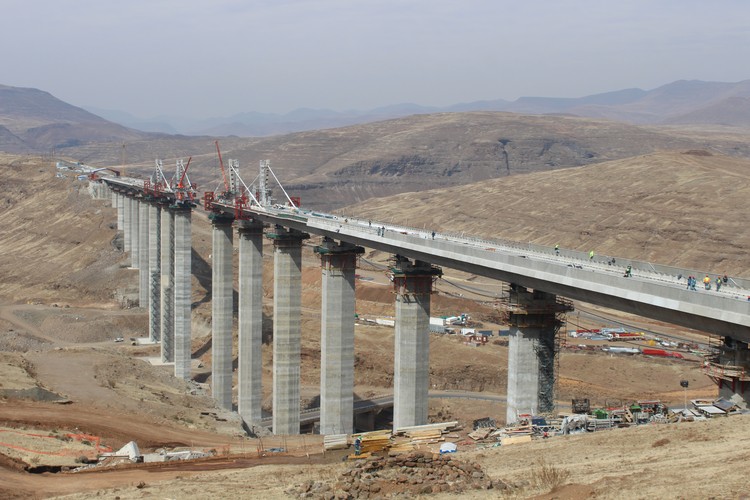
With approximately R18-billion of the planned R53-billion budget already invested—about R18-billion (or M18-billion in local currency)—the project’s development is gaining momentum despite a history of delays. The recent media tour hosted by LHDA revealed that the Senqu Bridge, an engineering marvel and one of the project’s largest structures at 825 meters long and 90 meters high, is 86% complete. This bridge, costing around R2.3 billion, is crucial for maintaining road access over the expanding reservoir and is now slated to be finished by February 2024, a delay from its original November 2025 deadline.
The project has become a significant economic engine for Lesotho, creating employment opportunities for some 14,000 locals. However, the benefits are uneven, with the country still grappling with a stubborn 30% unemployment rate. The development has also necessitated expropriation of over 7,200 community assets, with nearly R154-million paid in compensation to nearly 5,600 households and individuals—an emotional and logistical challenge that continues to unfold.
While engineering feats like the multi-billion rand bridges and tunneling projects showcase Lesotho’s growing infrastructure prowess, the journey has not been smooth. Site establishment delays, slow excavation efforts, and hold-ups in tunneling and spillway works have pushed back the water impoundment date from January 2025 to November 2026. Full completion, including all associated works, is now projected for between August and September 2029.
Environmental management remains a balancing act. Contractors have generated over 20,500 liters of waste oil, nearly 9,000 kilograms of hazardous waste, and over 34,000 cubic meters of wastewater. Local communities have voiced concerns about dust, noise, and water quality issues, though project managers emphasize that no incidents have been deemed significant and are actively monitored.
In parallel, the construction of three major bridges—Khubelu, Mabunyaneng, and the flagship Senqu—continues apace. The smaller Khubelu and Mabunyaneng bridges are about two-thirds complete, facilitating access across the reservoir once it is filled. The Senqu Bridge, a marvel of engineering, exemplifies resilience, designed to withstand floods and earthquakes for at least a century.
An essential part of the project is the 38-kilometer transfer tunnel connecting Polihali to the existing Katse Dam, enabling increased water flow to South Africa. Two massive tunnel boring machines, imported from China, are set to begin excavation early next year from opposite ends, meeting in the middle to complete the tunnel by 2026—another critical step in regional water collaboration.
Though progress has been marred by unforeseen delays, the Polihali Dam symbolizes Lesotho’s determination to play a vital role in regional development while addressing its own needs. As the project nears its final phases, it promises to deliver water security for millions and boost Lesotho’s energy capacity, marking a significant milestone in the nation’s journey toward sustainable growth.