Subtotal R0,00

Gauteng/ 29 August 2025, 12:34pm/Staff Writer
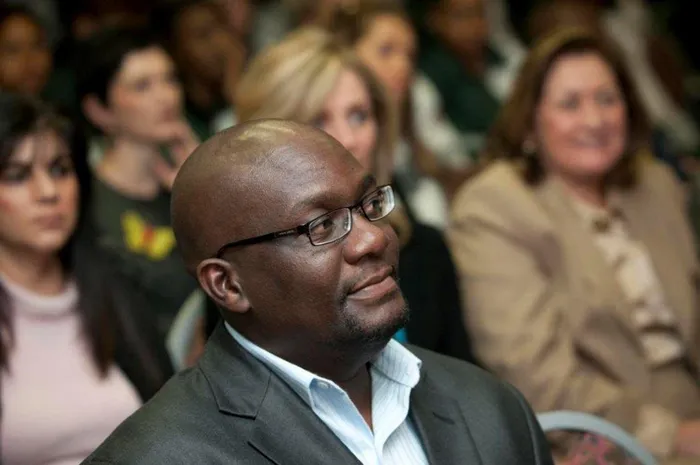
Tuwani Matthews Mulaudzi: Image Supplied
By Staff Writer: Gauteng businessman Tuwani Matthews Mulaudzi appeared poised to regain control of a vast business conglomerate and substantial cash reserves after a dramatic bid by creditors to derail his rehabilitation was thwarted at the eleventh hour.
The unfolding sequence now points toward a Pretoria High Court hearing set for December 2, when Mulaudzi’s rehabilitation by effluxion of time is anticipated to be granted. If confirmed, the move would release him from the financial constraints he attributes to what he has long characterized as “trumped-up criminal charges.”
A decade-long saga has framed Mulaudzi’s return to financial sovereignty, tracing back to 2014 when a collapse in his business interests sparked a cascade of legal and financial consequences. At the heart of the case were charges of fraud, theft, money laundering, and racketeering, connected to a R48 million investment.
Although Mulaudzi ultimately prevailed in the Pretoria Commercial Crimes Court in 2022, the victory came alongside the dissolution of his business empire, which was liquidated and sequestrated in the process. An earlier report quoted at the time asserted, “From there onwards, Mulaudzi will have full rights to regain all his assets worth billions of rand and R105 million in cash he lost when he was liquidated and sequestrated.”
Today, Mulaudzi remains the executive chairperson of Luvhomba Group, a diversified conglomerate with interests spanning mining, information technology, consulting, and retail. He has expressed that rehabilitation would allow him to begin anew, unburdened by lingering debt and the encumbrances of past litigation.
The most recent hurdle appeared when trustees Christopher Peter van Zyl, Oscar Jabulani Sithole, and Selby Musawonke Ntsibande filed an urgent application to halt the December court date. In a move described by observers as strategically aimed at buying time, the trustees maneuvered their way out of the urgent docket on Monday, effectively rendering Mulaudzi’s rehabilitation a “fait accompli,” according to contemporaneous reports.
Comment on the procedural maneuver was unavailable from the trustees’ legal counsel by press time. A registrar’s notice confirmed the development, stating: “Be pleased to take notice that the above urgent application which is set down on the urgent roll for hearing on Tuesday, 2nd September 2025, is hereby removed from the roll, and postponed sine die (indefinitely).”
Mulaudzi has been vocal about his experiences since acquittal in 2022, describing a protracted struggle to reclaim assets from creditors, liquidators, and unnamed officials. He has asserted success in the Supreme Court of Appeal, arguing that his insolvency resulted directly from “fictitious” charges.
“The criminals must return my belongings because I will be rehabilitated and free from debt. Therefore, by December 2, 2025, after 10 years, the sequestration and liquidation will naturally expire due to the passage of time and the operation of law,” Mulaudzi stated, signaling his confidence in the upcoming rehabilitation ruling.
The origins of Mulaudzi’s troubles trace back to 2014, when Old Mutual alleged that he ceded a R48 million investment to Nedbank and then sought payment upon maturity. The Assets Forfeiture Unit (AFU) of the National Prosecuting Authority (NPA) became involved, alleging that Mulaudzi had ceded a R33 million investment fronters policy to Nedbank for R37.6 million, and subsequently used the same policy to secure an overdraft facility with Absa. The AFU further alleged that upon policy maturation, Mulaudzi requested the full R48 million to be paid to him, a sum deposited into his Absa account on June 6, 2014, prior to Nedbank reflecting the cession on Old Mutual’s records.
Even though a court cleared him in 2022, the financial damage lingered, forcing his family to drastically alter their lifestyle. Mulaudzi is now pursuing a lawsuit against the State for malicious prosecution, initially seeking R5 billion in damages. An actuary’s report later quantified his total losses at a staggering R184 billion, a figure broken down into components such as lost profits from Luvhomba Group’s electronics subsidiary (R120.3 million), shares in a coal mine and an e-commerce business (R246.5 million), a R100 million investment in a mining company, and the broader value of Luvhomba assets estimated at R3.2 billion.
Additional losses cited include R61 million in income from a Department of Education contract, R116.6 million in salary income, and a staggering R84.2 billion in dividends that were never realized.
Analysis of these developments suggests a potential turning point in a saga that has spanned more than a decade, entwining high-stakes business assets with complex legal battles and questions of accountability. If the December ruling proceeds as anticipated, Mulaudzi’s rehabilitation could be formalized, setting the stage for him to reclaim a substantial portion of what has been described as a vast and once-thriving empire.