Subtotal R0,00

Crime/ 21 August 2025, 07:28am/Mpho Mokoena
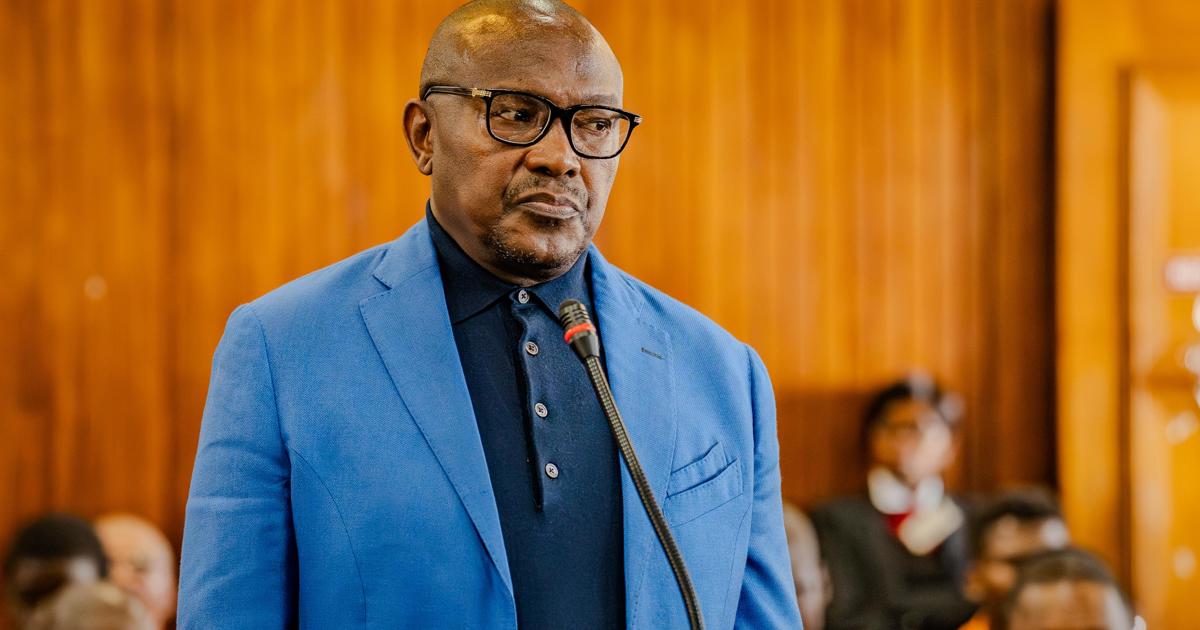
Katiso “KT” Molefe: Image Supplied
By Mpho Mokoena: The Alexandra Magistrates’ Court on Wednesday refused bail for Katiso “KT” Molefe and three co-accused in the killing of Oupa “DJ Sumbody” Sefoka and his bodyguards. The ruling signals not just the gravity of the Sefoka case, but a judiciary increasingly focused on mapping a widening constellation of linked offences, movements of cash, and communications that weave through multiple dockets.
The bail ruling comes as Molefe, accused of orchestrating a contract-killing scheme, remains in custody ahead of a provisional indictment set for 18 September. The court’s decision rests on a tapestry of evidence the State argues shows increasing links among the four accused and patterns of telecoms activity and unexplained cash deposits surrounding the critical moments of the murders.
As magistrate Renier Boshoff summarized the legal standard: “There is also the statutory framework requiring that the accused must, on the balance of probabilities, show the existence of exceptional circumstances.” Minutes later he delivered the outcome: “His application for bail is accordingly refused.” Molefe appeared calm and did not noticeably react to the denial of his liberty.
The State’s case is anchored in the November 2022 Woodmead execution of Sefoka and his bodyguards, Sibusiso Mokoena and Sandile Myeza. Prosecutors allege Molefe acted as the organiser of a contract-killing scheme, with three counts of murder and conspiracy to commit murder, plus ancillary counts involving firearms and ammunition. The State’s account frames the killings as “assassination style” operations, noting that “The victims were killed in assassination style with AK-47 assault rifles.”
Crucially for the bail decision, the court highlighted communications and financial patterns that allegedly correlate with the attacks. The ruling records cellphone activity around the events and cash movements immediately afterwards. “In all these cases, cash deposits followed,” Boshoff said. The court also drew attention to substantial sums deposited into an account linked to Molefe’s company, for which no persuasive explanation had been offered.
The defence, meanwhile, argued that the case against Molefe rests on circumstantial evidence and that he was not physically present at any scene. Under the framework for Schedule 6 offences, the onus lies with the accused to show exceptional circumstances justifying release. The court found the threshold unmet, observing that “the evidential link between the four accused persons in this case appears to have increased,” Boshoff stated.
Beyond the Sefoka matter, the proceedings touch a broader, unsettled landscape of crime and law-enforcement focus. Molefe’s arrest in late July 2025 at his Sandton home and his subsequent appearance in Alexandra are part of a wider narrative prosecutors have described: a network of linked shootings that extend across multiple cases, with ballistics and overlapping accused binding seemingly disparate crimes together.
Police have asserted that firearms used in the Sefoka killings are forensically linked to other dockets, including the killings of Soweto DJ Hector “DJ Vintos” Buthelezi and engineer Armand Swart, among others flagged by investigators. In a scene reported by officers, Molefe’s arrest unfolded with a sideline spectacle: Patriotic Alliance deputy president Kenny Kunene was present at Molefe’s home during the police entry, later explaining he had been there to facilitate an interview with Molefe.
Within this larger web, two of Molefe’s co-accused in the Sefoka docket—Musa Kekana and Tiego Floyd Mabusela—also appear in the Thobejane case, where television personality Tebogo Thobejane survived an ambush on the N1 near Sandton in October 2023. Another accused, Nthabiseng Nzama, faces a money-laundering count. The interlocking membership of accused and the ballistics footprint have prompted authorities to speak of a “networked assassinations” scenario, a concern raised publicly by KwaZulu-Natal SAPS commissioner Lieutenant General Nhlanhla Mkhwanazi in a July briefing.
As the court emphasized, the practical upshot of the bail denial is continued custody until the indictment process advances. Molefe remains in custody with a provisional date set for 18 September for the State to serve the indictment and for the matter’s transfer accordingly.
The legal and political backdrop adds further dimension to the proceedings. In parallel with Molefe’s bail decision, Justice Mbuyiseli Madlanga, chairperson of the Judicial Commission of Inquiry into Criminality, Political Interference and Corruption in the Criminal Justice System, announced hearings to begin on 1 September. The commission’s remit, born of Mkhwanazi’s allegations, will bring public scrutiny to concerns about political interference and the integrity of the investigative process. Although Molefe was not explicitly named in those allegations, his case sits within the broader frame of alleged political entanglement and interwoven criminal activity that the commission aims to probe.
The NPA spokesperson, Phindi Mjonondwane, underscored the prosecutorial view: “As alluded, the evidence against the accused is overwhelming. We have substantiated our allegations as the prosecution in court by giving evidence of how they are linked to the alleged offense. Amongst them are WhatsApp messages between accused 1, 2, and 3. They were communicating with the applicant who was in court today and denied bail, the one that we are alleging is the middleman who facilitated the payments to the accused person. We are welcoming the judgment.”
Outside the courtroom, the Sefoka family articulated the impact of the decision in stark terms. A family representative stated, “Izinkabi will not be tolerated. We have reached a point in our country’s history where we are not tolerant, where we are led by bullets. We cannot afford to have our people live in fear, whether it is a police officer, a prosecutor, a witness, or a whistleblower blower is being killed. We cannot allow disputes to be resolved with a bullet. We have to be able to engage and mediate as people.”
Molefe will be back in court on the 18th of September, when the State is expected to lodge the indictment and the matter will be transferred accordingly.