Subtotal R0,00

KwaZulu-Natal/ 07 July 2025, 09:43am/Sipho Gumede
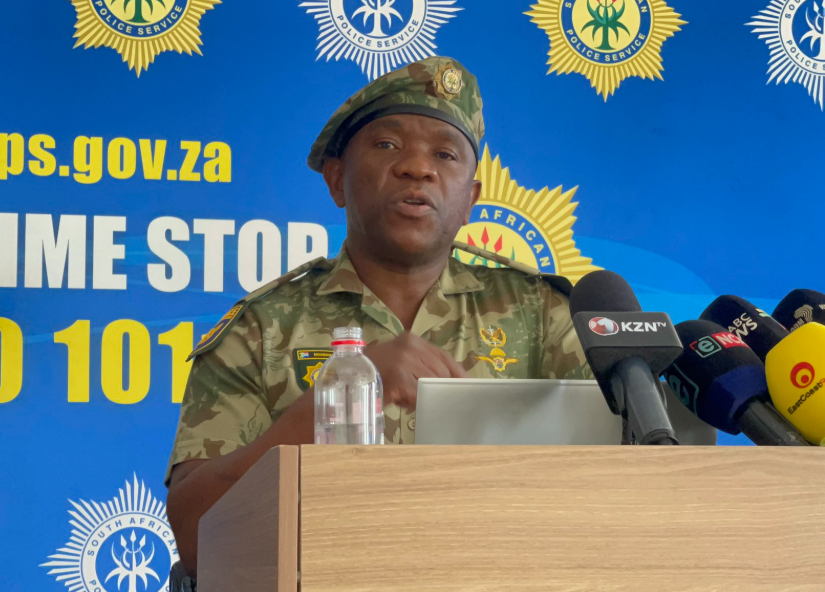
KwaZulu-Natal’s police commissioner, Lieutenant-General Nhlanhla Mkhwanazi: Image Supplied
By Sipho Gumede: KwaZulu-Natal’s police commissioner, Lieutenant-General Nhlanhla Mkhwanazi, has publicly voiced his strong opposition to recent decisions surrounding the disbandment of a specialized police unit tasked with addressing political killings. In a candid and fiery briefing held on Sunday, Mkhwanazi questioned the wisdom and legality of disbanding the controversial political killings task team, raising concerns over political interference and the broader implications for law enforcement.
Mkhwanazi revealed that on March 26 this year, a total of 125 case dockets under investigation were withdrawn from the task team, following directives from Deputy National Commissioner for Crime Detection, Lieutenant-General Sibiya. This move was reportedly made under the instruction of Police Minister Senzo Mchunu, who ordered the disbandment of the unit.
He expressed outrage, stating, “On the 26th of March this year a total of 125 case dockets that were under investigation were taken away from the task team as directed by a deputy national commissioner crime detection lieutenant-general Sibiya was acting on the instruction of the Minister of Police [Senzo Mchunu] to disband the team.”
Mkhwanazi further highlighted that among these cases, five had specific instructions for arrests, but “nothing has been done because Sibiya withdrew these dockets.” He added, “Only a total of 124 dockets which are still in court of which 54 of them are politically related.”
The police chief did not hold back in criticizing what he perceives as undue influence by political entities and other state actors. He accused politicians, the judiciary, and the National Prosecuting Authority (NPA) of aiding and abetting criminals, undermining the fight against organized crime and politically motivated violence.
“I am prepared to die in the fight against crime,” Mkhwanazi declared passionately, emphasizing his commitment to law enforcement despite the challenges.
Mkhwanazi further alleged that Minister Mchunu’s decisions and actions have been influenced by associates outside the police service. One such individual, a man named Brown Mogotsi, reportedly sent WhatsApp messages concerning allegations involving the Department of Correctional Services in Empangeni, KwaZulu-Natal, which Mkhwanazi described as “regarding the allegations on the defeating the ends of justice matters which were publicized.”
The police commissioner revealed that Mogotsi also shared a presentation titled “2024/2025 Division Crime Intelligence Policies” with the KZN police chief. Mkhwanazi questioned the minister’s stance, noting that Mchunu initially denied knowing Mogotsi but later admitted that “this was his comrade from North West Province.”
Evidence uncovered from the cellphone of accused suspect Vusimuzi ‘CAT’ Matlala further implicated Mchunu, showing communication between the minister and Mogotsi.
Mkhwanazi outlined a timeline of events that he described as troubling. “On the 31st December 2024, the Minister of Police Mr Senzo Mchunu, issued a letter to disband the Political Killings Task Team and to suspend the filling of all vacancies within the Crime Intelligence,” he explained. “In January, February, and April 2025, the Deputy National Commissioner Crime Detection Lt General Sibiya issued written instructions withdrawing all the case dockets from the Task Team to his office.”
The police commissioner’s remarks come at a time of heightened tension within South Africa’s law enforcement community, with many questioning the influence of political actors on police investigations. Mkhwanazi emphasized the importance of integrity within the police force and the need to dismantle drug cartels fueling crime.
“We need to destroy all drug nests because it is these drugs that fuel crime in the country; criminals become brave after taking drugs and start doing criminal activities,” he said. Despite this, he expressed satisfaction with the work done by his officers in KwaZulu-Natal but acknowledged that “there is still room for improvement.”
Mkhwanazi’s fiery stance underscores the ongoing struggle between law enforcement and political interference, a battle that many believe hampers efforts to combat serious crime, including politically motivated violence and organized crime syndicates.
He concluded his briefing with a powerful statement: “Even if it means to pay with my life, let it be,” reaffirming his dedication to his duty and his willingness to stand firm against corruption and interference, whatever the cost.