Subtotal R0,00

National News/ 05 July 2025, 08:40am/ GoodWill Mathebula
Former Deputy David Mabuza: Image Supplied
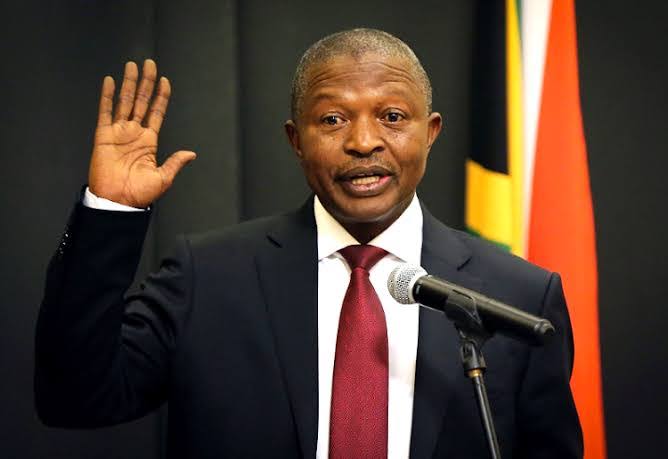
By GoodWill Mathebula: The nation is mourning the death of a political titan, David Mabuza, whose influence spanned decades and who was renowned for his strategic maneuvering and unwavering commitment to his country’s liberation and development. Mabuza, the former deputy president of South Africa, died in a Johannesburg hospital on Thursday after a prolonged battle with health complications tied to an alleged poisoning incident from 2015.
In a rare disclosure, Welcome “Mkapla” Nkuna, who was the first bodyguard to Mabuza when he became Mpumalanga’s Education MEC in 1994, revealed that the late former deputy president had spent a significant period in Russia just last month. Nkuna stated that Mabuza had traveled there for routine check-ups and was hospitalized in Russia for 21 days before returning to South Africa.
“What I know is that he was in Russia for check-ups for a period of 21 days before he came back home,” Nkuna explained in an interview. “We would talk on the phone whenever he was in Russia, and I had grown used to him going there. I didn’t see him immediately after his return, and I was surprised to learn that he had been hospitalized in Johannesburg so soon after coming back.”
Sources close to Mabuza had long suggested that his health issues stemmed from the effects of an alleged poisoning incident that occurred at his birthday celebrations in 2015—a tragedy that cast a shadow over his later years and prompted extensive medical treatment abroad.
Born in Mpumalanga, Mabuza’s roots in activism were deep and well-documented. As a student, he demonstrated early leadership, serving as secretary of the Azanian Students Organisation in 1984. His commitment to education and resistance against apartheid marked the beginning of a lifelong journey in public service and political strategy.
He first gained national prominence when he was appointed Mpumalanga’s first Education MEC in 1994, a pivotal moment as South Africa transitioned to democracy. His influence expanded further when he became Premier of Mpumalanga in 2009, a role that cemented his reputation as a shrewd and often secretive political operator. His nickname, “The Cat,” was a testament to his stealthy, behind-the-scenes negotiation style—an attribute that often kept him ahead of rivals and critics.
Mabuza’s political influence was not confined to Mpumalanga. His behind-the-scenes role in national politics became evident during the ANC’s 54th National Conference in 2017, where he played a decisive role in thwarting the Radical Economic Transformation (RET) faction aligned with Jacob Zuma’s clique. His maneuvering was credited with helping to shape the ANC’s post-Zuma direction, ensuring stability within the party’s ranks.
In 2018, Mabuza was appointed Deputy President of South Africa, a position he held until stepping down in 2023. During his tenure, he maintained a low profile, often described as a “shadow” figure whose influence was felt more in corridors of power than in public speeches or media appearances. His departure from public life in 2023 sparked speculation about internal party dynamics and his future role within the ANC.
President Cyril Ramaphosa issued a statement expressing profound sadness at Mabuza’s passing: “We are saddened today by the loss of a leader who was grounded in activism at the early stages of his political career and who came to lead our nation and shape South Africa’s engagement with our continental compatriots and the international community in his role as deputy president.”
Other prominent political figures echoed similar sentiments. ANC Secretary-General Fikile Mbalula described Mabuza as “a great leader who dedicated his life to service, embodying unity, discipline, and transformation.” Rise Mzansi leader Songezo Zibi called him a “freedom fighter, seasoned politician, unionist, and operator,” emphasizing his multifaceted role in South Africa’s struggle and governance.
Herman Mashaba, leader of ActionSA, highlighted the enduring impact of Mabuza’s political career. “While reflections on his legacy will unfold over time, his contributions and influence span decades and have left a lasting mark on our country’s democratic journey,” Mashaba said in a statement Thursday night.
Mabuza’s early years were characterized by a deep commitment to education and activism. He matriculated at Khumbula High School, further studied at Mngwenya College of Education, and earned a Bachelor’s degree from the University of South Africa (Unisa). His activism began in earnest in the 1980s, serving as secretary of the Azanian Students Organisation in 1984, then as chairperson of the National Education Union of South Africa from 1986 to 1988.
He also served as coordinator of the National Education Crisis Committee between 1987 and 1989 and was chairperson of the South African Democratic Teachers Union (Sadtu) from 1988 to 1991. His early activism and leadership in education unions laid the foundation for his later political career.
As the nation mourns the loss of one of its most influential and enigmatic leaders, funeral arrangements are yet to be announced. The passing of David Mabuza marks the end of an era—one defined by strategic influence, activism, and a complex legacy that continues to shape South Africa’s political landscape.
Mabuza’s death has prompted reflection across the political spectrum, with many acknowledging his role as a behind-the-scenes power broker whose influence helped stabilize and shape the ANC and South Africa as a whole. His life story, marked by resilience, strategic acumen, and an unwavering commitment to activism, cements his place in the annals of South African history—a figure whose shadowy yet impactful career will be studied and debated for years to come.