
Subtotal R0,00

Free State/ 24 June 2025, 09:19am/Mpho Mokoena

By Mpho Mokoena: The African Transformation Movement (ATM) has reignited discussions around the renaming of towns with colonial-era names, urging government officials to take action to address cultural sensitivities and historical injustices.
In a parliamentary question-and-answer session, the ATM proposed that the Minister of Sport, Arts and Culture, Gayton McKenzie, initiate processes to rename towns like Harrismith and Smithfield. The party argued that these towns, named after historical figures associated with colonial oppression, are painful reminders of South Africa’s troubled past.
ATM Member of Parliament Vuyolwethu Zungula emphasized that towns bearing the names of figures who inflicted harm upon indigenous populations should be reconsidered. Specifically, he pointed out that Harrismith and Smithfield are linked to Harry Smith, the Cape Colony governor responsible for the capture and death of King Hintsa kaKhawuta of the AmaXhosa in 1835.
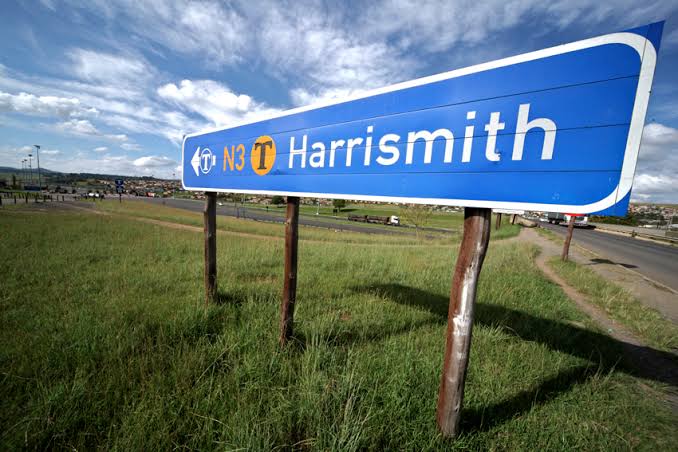
Harrismith, established in 1849, is among South Africa’s oldest towns and is situated in the Free State. It has long been a vital stopover for travelers on the N3 route, serving as a refueling station for trucks and a gateway to popular tourist destinations nearby. Despite its prominence, the town has faced calls for a name change dating back as far as 2005, when proposals emerged to rename it Intabazwe.
Further proposals surfaced in 2014/15, but local communities opposed these efforts and petitioned to retain the current name. The debate underscores the complex relationship communities have with historical names and the importance of local consensus in such decisions.
Zungula also mentioned Aliwal North, another town historically linked to Harry Smith. However, its name was officially changed to Maletswai in 2015, rendering further discussions about its renaming moot.
Minister McKenzie responded to the ATM’s request by clarifying that the Department of Sport, Arts and Culture does not have the authority to unilaterally initiate name changes. Instead, he emphasized that the process must be community-driven and adhere to established procedures.
“The process must start with the communities that seek the changes,” McKenzie explained. “They need to follow the standard operating procedures, which are highly consultative and mandate that a Provincial Geographical Names Council (PGNC) conducts public consultations in the affected area before any submission is made to the Minister.”
The procedures for renaming towns or streets involve several key steps:
Proposal Submission: Individuals, communities, or institutions submit proposals via the relevant PGNC.
Public Consultation: The PGNC facilitates community consultations, ensuring compliance with the Promotion of Administrative Justice Act (PAJA).
Verification and Recommendation: The South African Geographical Names Council (SAGNC) assesses the proposal based on historical significance, community support, and technical accuracy.
Final Approval: The Minister considers the recommendation and gazettes the new name if approved.
When a proposed name honors an individual, it is crucial to consult with that person’s family to ensure respect and obtain consent.
McKenzie clarified that street and municipal naming fall under local municipal jurisdiction, not the SAGNC. The naming of municipalities is overseen by the Minister of Cooperative Governance and Traditional Affairs, with processes involving public participation and legislative compliance similar to those for geographical names.
He cited the recent case of Johannesburg’s attempt to rename Sandton Drive to Leila Khaled Drive as an example of the complexities involved in municipal renaming initiatives.
While outlining the current process, McKenzie highlighted that the Department of Sports, Arts and Culture is actively working to reform the system through the South African Geographical Names Council Amendment Bill. Drafted in January and open for public comment, the bill aims to address existing shortcomings by establishing formal provincial committees and creating a structured appeals process.
Since the establishment of the SAGNC, over 1,500 name changes have been processed, including major towns and cities. Notable recent examples include the renaming of Port Elizabeth to Gqeberha in 2021 and Ladysmith being renamed uMnambithi in 2024.
Despite these efforts, public dissatisfaction persists. Many South Africans report being unaware of ongoing name change processes, and critics argue that public hearings are not effectively communicated or accessible. Opposition parties have voiced concerns that name changes are sometimes pushed through despite opposition, with inadequate avenues for appeal.
McKenzie acknowledged these issues, stating that the new bill aims to enhance transparency, public participation, and accountability in the process.
The debate over renaming towns like Harrismith and Smithfield highlights the broader challenge of reconciling South Africa’s colonial history with its present-day identity. While the government emphasizes community participation and procedural integrity, the call for change reflects a growing desire among many South Africans to reclaim their cultural heritage and honor their ancestors.







