Subtotal R0,00

International News/ 12 May 2025, 15:28pm/ Lijeng Moruthane
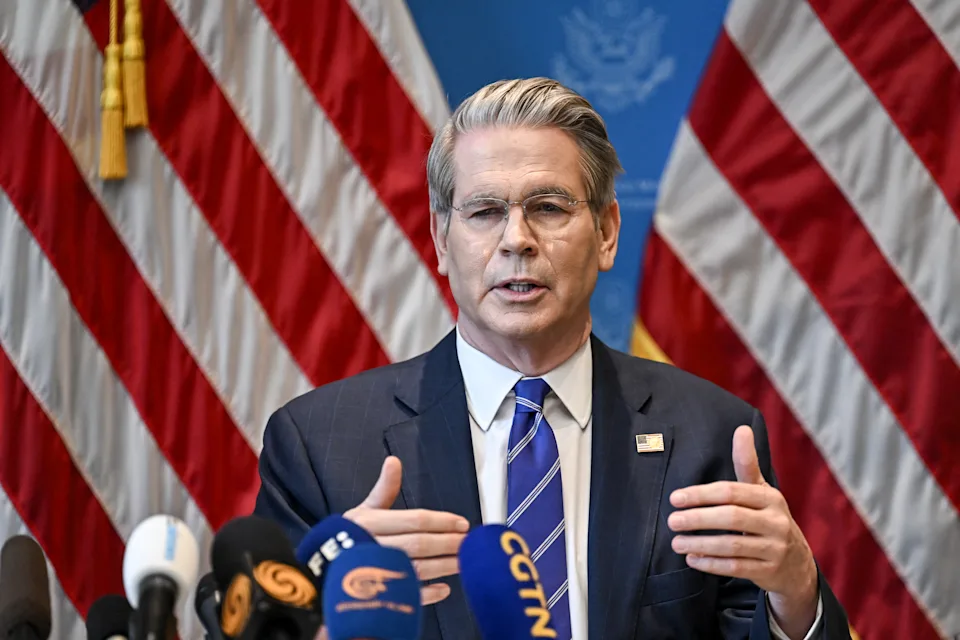
US Treasury secretary Scott Bessent: Image Supplied
By Lijeng Moruthane: In a significant de-escalation of trade hostilities, the United States and China on Monday agreed to a temporary suspension of most tariffs on each other’s goods, cutting reciprocal duties from a combined 125 percent down to 10 percent. The agreement, reached after high-stakes negotiations over the weekend in Switzerland, takes effect Wednesday and will remain in force for 90 days.
At a joint news conference on the shores of Lake Geneva, U.S. Treasury Secretary Scott Bessent hailed the “very productive talks” and credited the neutral setting for fostering “equanimity” in what he described as “a very positive process.”
Under the terms of the accord, both countries will roll back the bulk of levies they imposed on one another, with the notable exception of a 20 percent U.S. duty on Chinese imports tied to fentanyl, leaving total U.S. tariffs on China at 30 percent.
Since resuming office in January, President Donald Trump has unleashed a series of aggressive trade measures aimed at reducing America’s trade deficit, provoking sharp retaliatory levies from Beijing—particularly on rare earth elements critical to high-tech manufacturing. Trump’s own tariffs had reached up to 145 percent on certain Chinese exports, rattling global markets and stoking recession worries.
Financial markets responded enthusiastically to the truce. In early U.S. trading, Nasdaq futures surged 3.7 percent, while S&P 500 futures climbed 2.7 percent and the Dow Jones Industrial Average was up more than 840 points, or 2 percent.
The ICE U.S. Dollar Index, which gauges the greenback against a basket of major currencies, jumped 1.1 percent to 101.46. European equities also advanced, with the STOXX Europe 600 index rising about 1 percent by midmorning.
Oil benchmarks saw similar gains: July-delivery Brent crude rose 2.7 percent to $65.66 a barrel, and West Texas Intermediate climbed 2.9 percent to $62.81 a barrel.
Analysts offered cautious optimism. Mark Williams, chief Asia economist at Capital Economics, called the deal “a substantial de-escalation,” but warned that U.S. tariffs on China remain higher than those on other trading partners and that broader international pressure on Chinese trade practices could undermine a lasting peace.
Tai Hui, APAC chief market strategist at J.P. Morgan Asset Management, noted that the scale of the tariff rollback exceeded market expectations, reflecting mutual recognition that punitive levies hurt global growth.
“The 90-day period may not be sufficient for a comprehensive accord,” Hui said, “but it keeps pressure on both sides to advance negotiations.” Investors are now awaiting clarification on whether China will lift its export curbs on rare earths and other key industrial commodities before any long-term deal can be secured.