Subtotal R0,00

National News/ 22 April 2025, 13:18pm/ Lijeng Moruthane
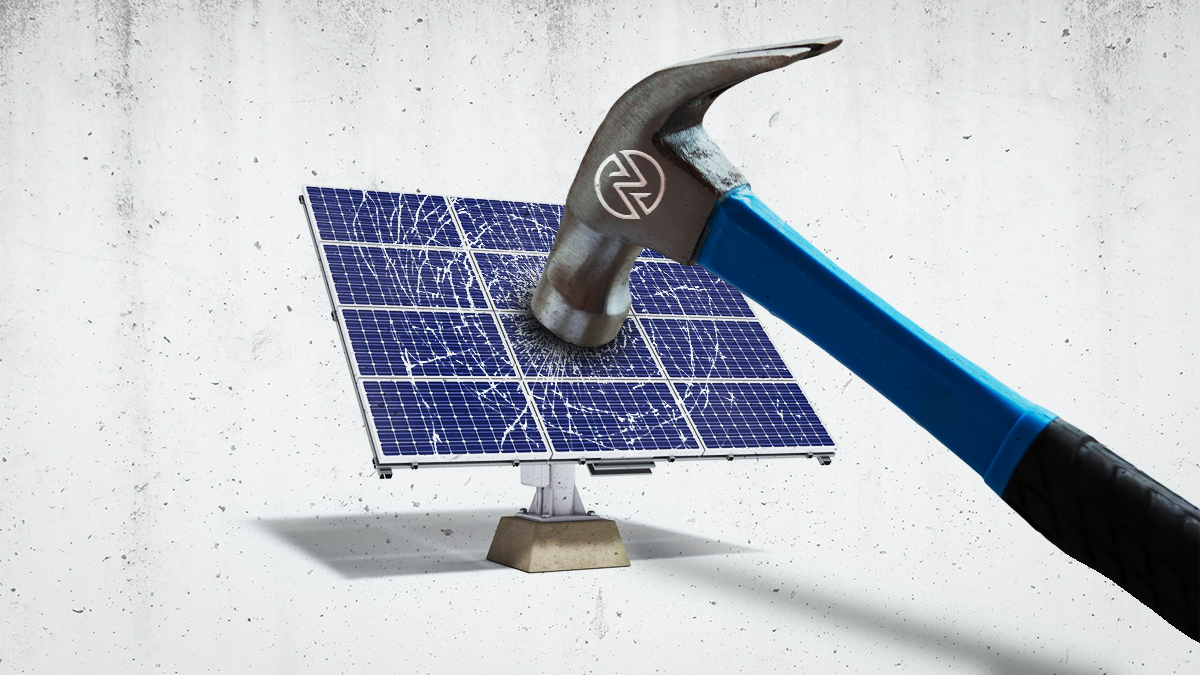
Homeowners with solar installations face steep costs — often over R20,000 — to comply with Eskom’s controversial grid registration requirements: Image Supplied
By Lijeng Moruthane: South African homeowners are facing steep compliance costs — in some cases exceeding R20,000 — just to meet Eskom’s requirements for registering grid-tied solar systems, raising serious concerns about the legality and fairness of the utility’s demands.
These costs arise from Eskom’s insistence that only engineers or technicians registered with the Engineering Council of South Africa (ECSA) may sign off on small-scale embedded generation (SSEG) systems. This requirement, energy expert Chris Yelland argues, is not supported by national legislation and could be unlawful.
“Depending on where you live, you could be asked to pay R10,000 to R20,000 just for an ECSA-registered engineer to design, test, and sign off your solar setup — even if you already have a valid Certificate of Compliance (CoC) from a licensed electrician,” Yelland said.
The requirement is part of Eskom’s broader campaign to register all grid-tied solar systems, even those that do not feed power back into the grid. The utility says the registration is necessary to maintain safety and control power flows on its network. Systems installed without Eskom’s permission are deemed unauthorised.
But critics argue that Eskom is enforcing standards that go beyond what the law requires.
Yelland points out that the utility’s demand for ECSA sign-off is based on NRS 097-2-3 — a technical standard developed by Eskom and municipalities, not a legally binding national standard.
“An NRS standard is not a South African national standard,” Yelland explained. “Eskom can make voluntary standards, but I question whether it’s legal to enforce them as mandatory.”
He said the current Electrical Installation Regulations, under the Occupational Health and Safety Act, only require that a registered electrician or contractor issue a CoC for any electrical installation — including those with solar panels.
This view is supported by the Electrical Contractors Association of South Africa (Ecasa), which has said that the law allows Installation Electricians (IEs) and Master Installation Electricians (MIEs) to work on solar systems without needing ECSA approval.
The conflict has triggered a backlash from consumers and organisations alike. Civil rights group AfriForum recently issued a legal demand to Eskom, asking the utility to cite the specific legislation backing its registration requirements for SSEG systems.
Meanwhile, Eskom maintains that it is applying “statutory requirements” to ensure network safety. On its SSEG portal, it lists a number of technical standards, including NRS 097-2-3, various SANS codes, and internal Eskom guidelines, as the basis for its policy.
However, critics say many of these standards — including the one requiring ECSA involvement — have either been withdrawn or are not legally enforceable.
Adding to the confusion is the fact that the latest version of the Electricity Regulation Act exempts private power systems under 100kW — which includes most residential installations — from needing a licence or registration with the National Energy Regulator of South Africa (Nersa).
Systems that do have an existing grid connection must still be registered with the local distributor, but there is no national law compelling the use of ECSA-accredited engineers for compliance.
“Eskom is overstepping its mandate,” said Yelland. “Until the national standard SANS 10142-1-2 is published, Eskom is using outdated or unofficial documents to enforce its own rules.”
He believes Eskom will eventually be forced to remove the ECSA requirement and return to the national norm — a CoC issued by a registered electrician.