Subtotal R0,00

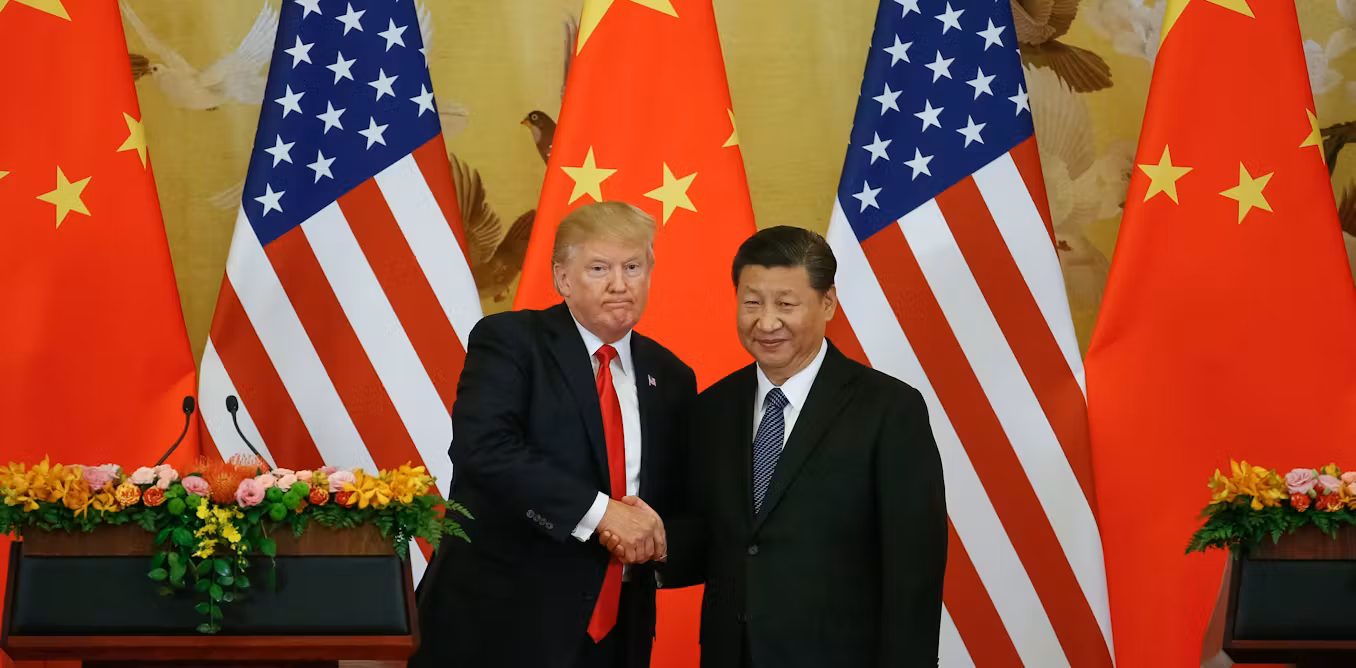
US President Donald Trump and Chinese President Xi Jinping: Image Supplied
By Lijeng Moruthane: China’s Finance Ministry has announced a dramatic 84% tariff on US imports, intensifying an already escalating trade war with Washington after US President Donald Trump raised tariffs on Chinese goods to an unprecedented 125%.
The move, which takes effect Thursday, marks a significant increase from China’s previous 34% tariff rate and comes in direct response to Trump’s latest protectionist measures. The US president had initially imposed a 104% tariff on a wide range of Chinese imports on Wednesday, only to increase it to 125% within hours, citing “the lack of respect” shown by Beijing.
“These new measures are effective immediately,” Trump wrote on his Truth Social platform. “At some point, hopefully in the near future, China will realise that the days of ripping off the USA, and other countries, is no longer sustainable or acceptable.”
Beijing condemned the tariffs as “hegemonic and bullying,” with Foreign Ministry spokesperson Lin Jian saying China would “never accept” such practices. Chinese officials also urged other nations to push back against the White House’s growing trade aggressions. “Global unity can triumph over trade tyranny,” read a sharply worded editorial in the state-run China Daily, highlighting China’s cooperation with Japan, South Korea, and other Asian economies.
A companion piece in the same paper urged the European Union to join forces with China in defense of free trade and multilateralism. The fallout from the trade spat sent shockwaves through global markets. The FTSE 100 plunged 3.3%, while Germany’s DAX dropped by 4% following the announcement of China’s retaliation.
Back in Washington, Trump simultaneously announced a 90-day tariff exemption for dozens of countries—excluding China—claiming those nations had “not retaliated in any way, shape, or form against the United States.”
But the US president’s escalating strategy is raising concerns among economists and industry leaders. The American Chamber of Commerce in China warned in a note to members that the situation is becoming unsustainable. “This level of upheaval is unprecedented,” wrote Chair Alvin Liu and President Michael Hart. “It remains unclear how the current measures will benefit consumers in either nation or the broader economy.”
The tariffs come at a delicate time for China, where the economy is still grappling with weak domestic consumption and remains heavily reliant on exports. Analysts warn the new levies could devastate profit margins.
“Any tariff above 35% essentially wipes out the profits Chinese exporters make when shipping to the US or Southeast Asia,” said Dan Wang of Eurasia Group.
One cross-border logistics operator said the higher duties are already forcing freight companies, factories, and sellers to slash margins and scramble to adjust supply chains. “It just means everyone earns less,” he said, requesting anonymity.
Companies like Fuling, which supplies disposable tableware to US fast-food chains including McDonald’s and Wendy’s, are particularly vulnerable. With nearly two-thirds of its revenue in 2023 stemming from the US, the company warned the tariffs would “significantly impact” its operations—even after opening a new factory in Indonesia.
But Trump’s global tariff strategy hasn’t spared Indonesian exports either, which are now subject to a 32% levy under the new policy. “There’s no clear way out,” said a freight manager whose company exports to the US from Vietnam and Cambodia—countries that were supposed to serve as alternatives to China but have also been hit hard by the sweeping tariffs.
As firms brace for impact, some Chinese companies are attempting to renegotiate deals with American clients to split the added costs. “Every case is different, but overall, the impact has been quite substantial,” said a manager at a Tianjin-based freight forwarding firm.
Meanwhile, construction projects in Southeast Asia are beginning to stall, with some supply chains grinding to a halt. “At 104%, that’s no longer something trade-offs can fix,” said Wu Changchun, general manager at Maritima Maruba. “That’s full-on decoupling. Trade would basically come to a standstill.”