Subtotal R0,00

Gauteng/ 04 March 2025, 10:50am/ Staff Writer
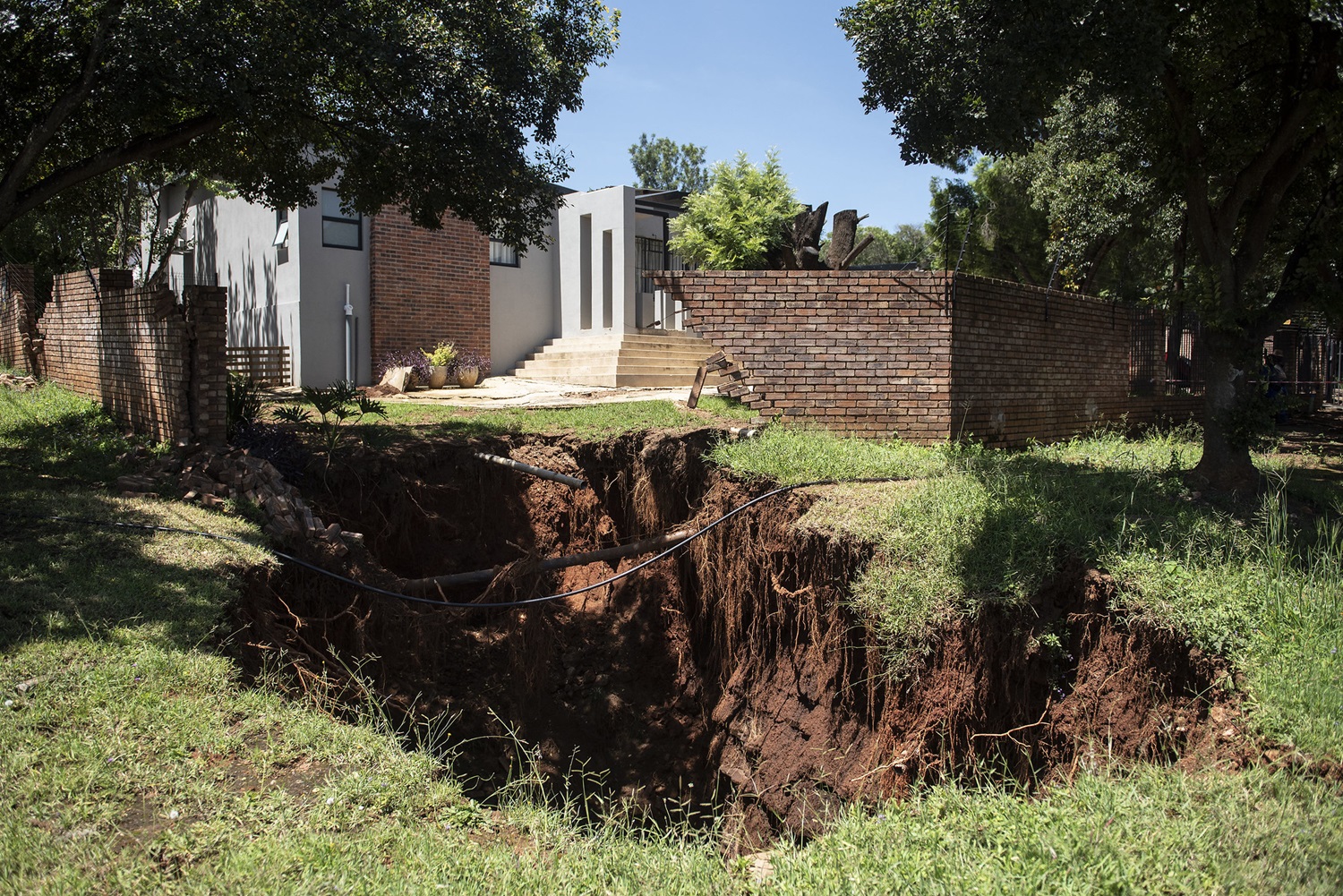
A sinkhole in Centurion after the ground collapsed on the corner of Trichardt and Van Riebeeck streets: Image Supplied
By Staff Writer: The City of Tshwane is grappling with the aftermath of severe weather conditions, including the formation of multiple sinkholes in Centurion, as heavy rains continue to cause havoc across the region.
The ongoing downpours have not only led to localized flooding and a tornado but have also highlighted the vulnerability of the city’s infrastructure, with the risk of further sinkholes and widespread potholes.
Recent rainfall has caused the appearance of three sinkholes in Centurion, with one particularly concerning sinkhole located at the corner of Trichardt and Van Riebeeck streets in Lyttleton showing signs of worsening.
Lyttleton councillor Johan van Buuren reported that two sinkholes had emerged in his ward, adding to a growing list of eight sinkholes in the area. He noted that the cost of repairing a sinkhole averages R30 million, a significant financial burden for the city.
“The sinkhole at Trichardt and Van Riebeeck streets is a pressing issue, and we’re concerned that it could get worse,” said Van Buuren. “We’re already dealing with multiple sinkholes, and the damage caused by the rain continues to escalate.”
City of Tshwane spokesperson Lindela Mashigo confirmed that leaking water pipes were the primary cause of the sinkholes, but other factors, such as leaking sewer and stormwater pipes, as well as ponding surface water, also contribute to their formation. He assured residents that the city is focused on upgrading its aging wet services to dolomitic standards to minimize further sinkhole occurrences in the long run.
“The main causes of the sinkholes are leaking water pipes, but other contributing factors include leaking sewer, stormwater pipes, and irrigation systems,” Mashigo explained. “Our long-term plan involves addressing these issues to prevent further sinkhole formation.”
As concerns about sinkholes mount, the state of the city’s roads has become a secondary but equally pressing issue. Councillor Jacqui Uys of DA Ward 85, along with volunteers, took proactive steps over the weekend to address the potholes on Kosmos Road, from Swaardlelie to Verkenner. Kosmos Road, a crucial route to Willow Ridge High School, had become hazardous due to the ongoing rain and worsening potholes.
“We have taken the approach to fill potholes as a community because the city does not have asphalt. The way the city fills the potholes results in them opening up after the first rains,” Uys said.
Uys and 17 volunteers spent five hours filling potholes on Kosmos Road, using Roadsaver material donated by the DA branch. The team managed to repair the deeper potholes, but some smaller holes could not be filled due to their shallowness. Uys emphasized that their efforts were necessary to protect schoolchildren and other road users from accidents caused by the damaged roads.
Despite these community efforts, the ongoing rainfall continues to exacerbate the road infrastructure problems in Tshwane. Van Buuren highlighted that since January, no potholes had been repaired in his ward, leaving residents frustrated with the lack of action from the city.
“Potholes are a big headache, especially when it rains, as they are often hidden under water and difficult for motorists to see,” he said.
Mashigo acknowledged the challenges, reporting that 61 potholes had been recorded on the city’s priority list, most of which were the result of heavy rain. While teams are working to address the issue, he warned that the constant rainfall and its impact on the city’s road infrastructure would continue to create difficulties.